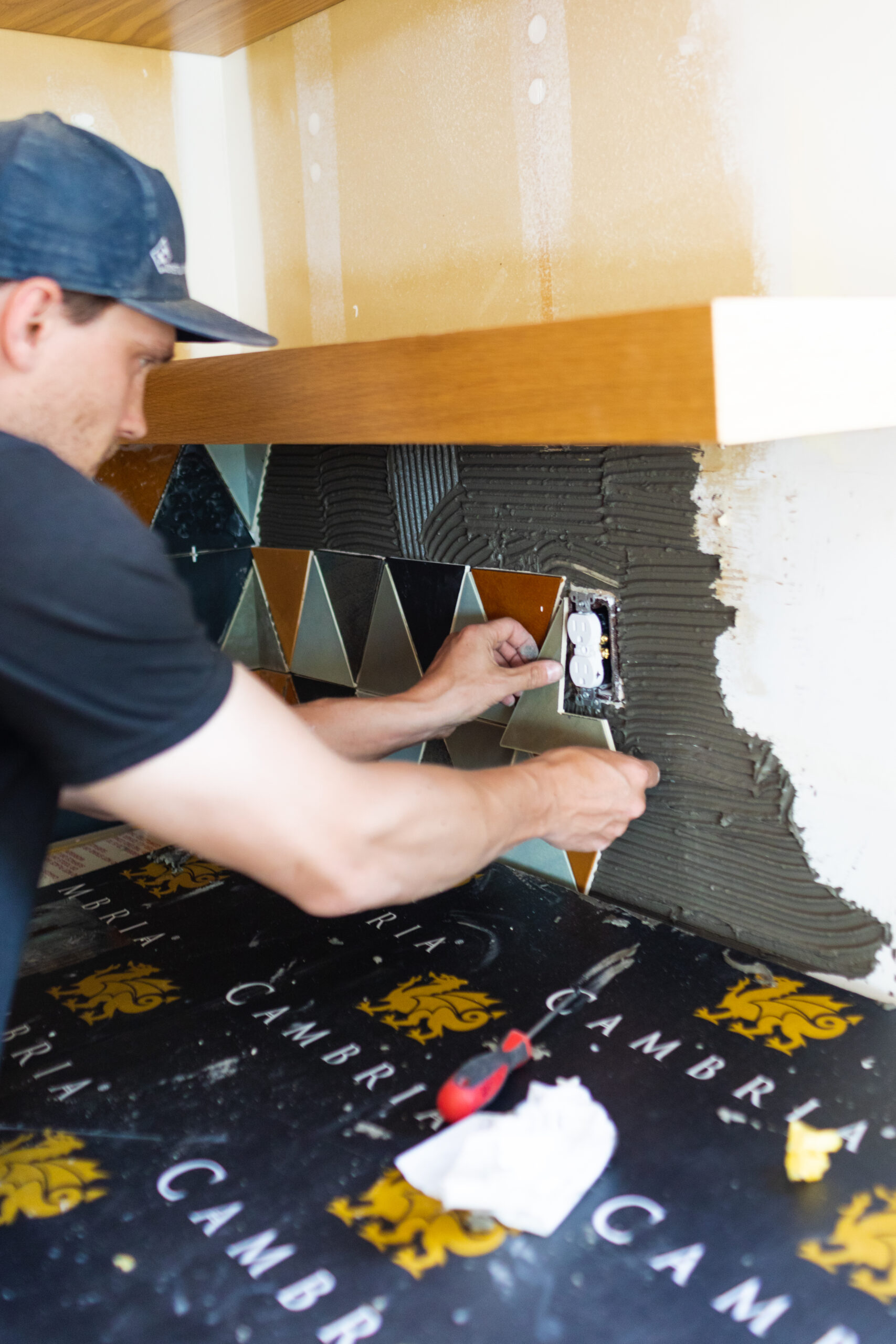
The pattern you choose for subway tile makes a bigger difference than most people realize. The same 3×6 tile can feel calm and classic in a running bond, or bold and architectural in a herringbone. Getting the pattern right is what separates a backsplash that blends in from one you actually love.
We have installed subway tile in more kitchens and bathrooms than we can count, and these are the 12 patterns we reach for most. For each one we have included how to lay it, what room it works best in, and a grout tip to get the most out of the look.
Subway tile has been around since the early 1900s, when it was first used in New York City’s underground train stations. Homeowners quickly adopted it for kitchens and bathrooms, and it has never really gone out of style. The standard size is 3 inches by 6 inches, but you will find it in everything from long skinny rectangles to larger format squares today. That versatility is a big part of why it has lasted over a century.
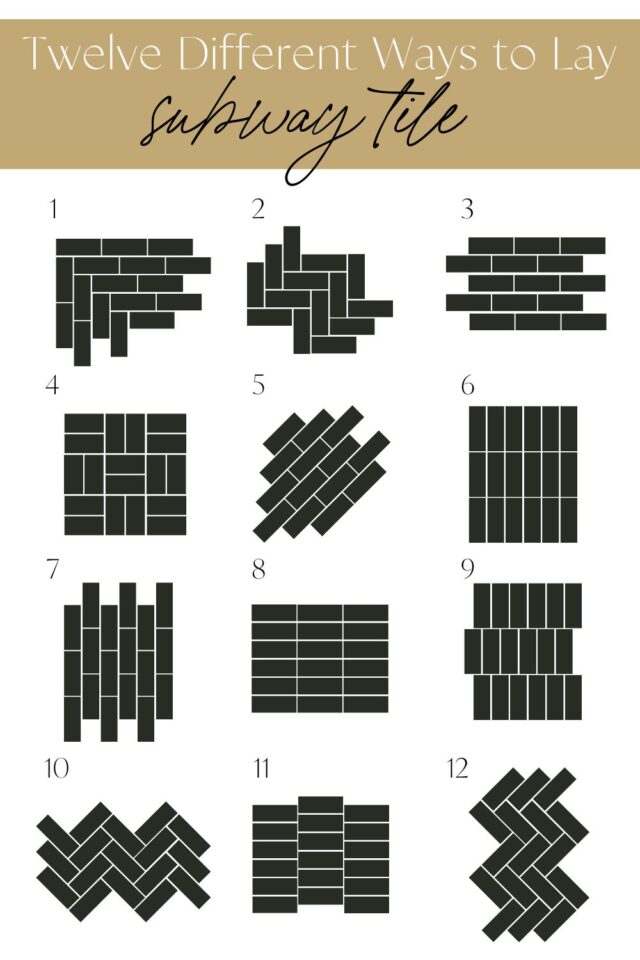
Subway Tile Layout Visual Guide

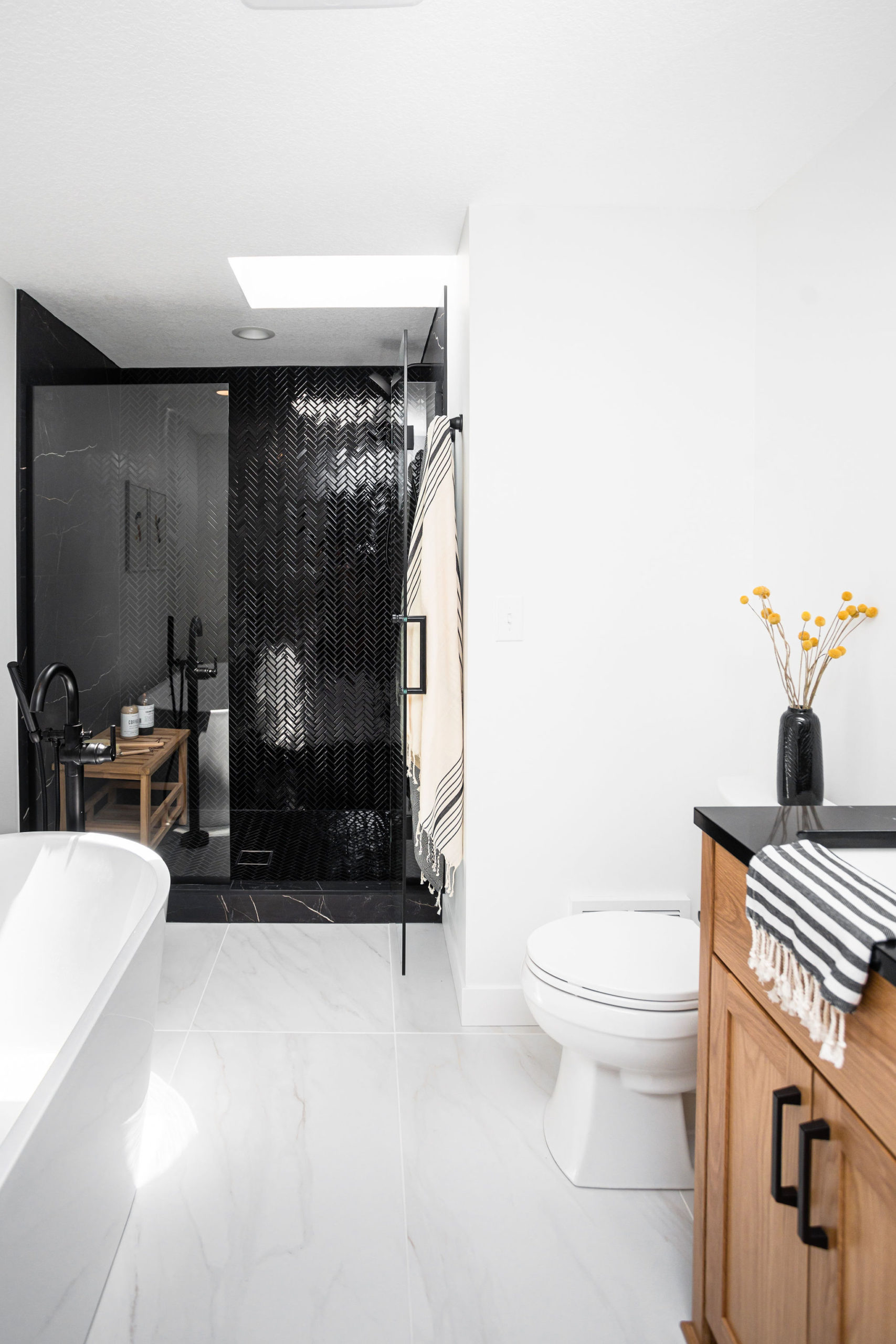
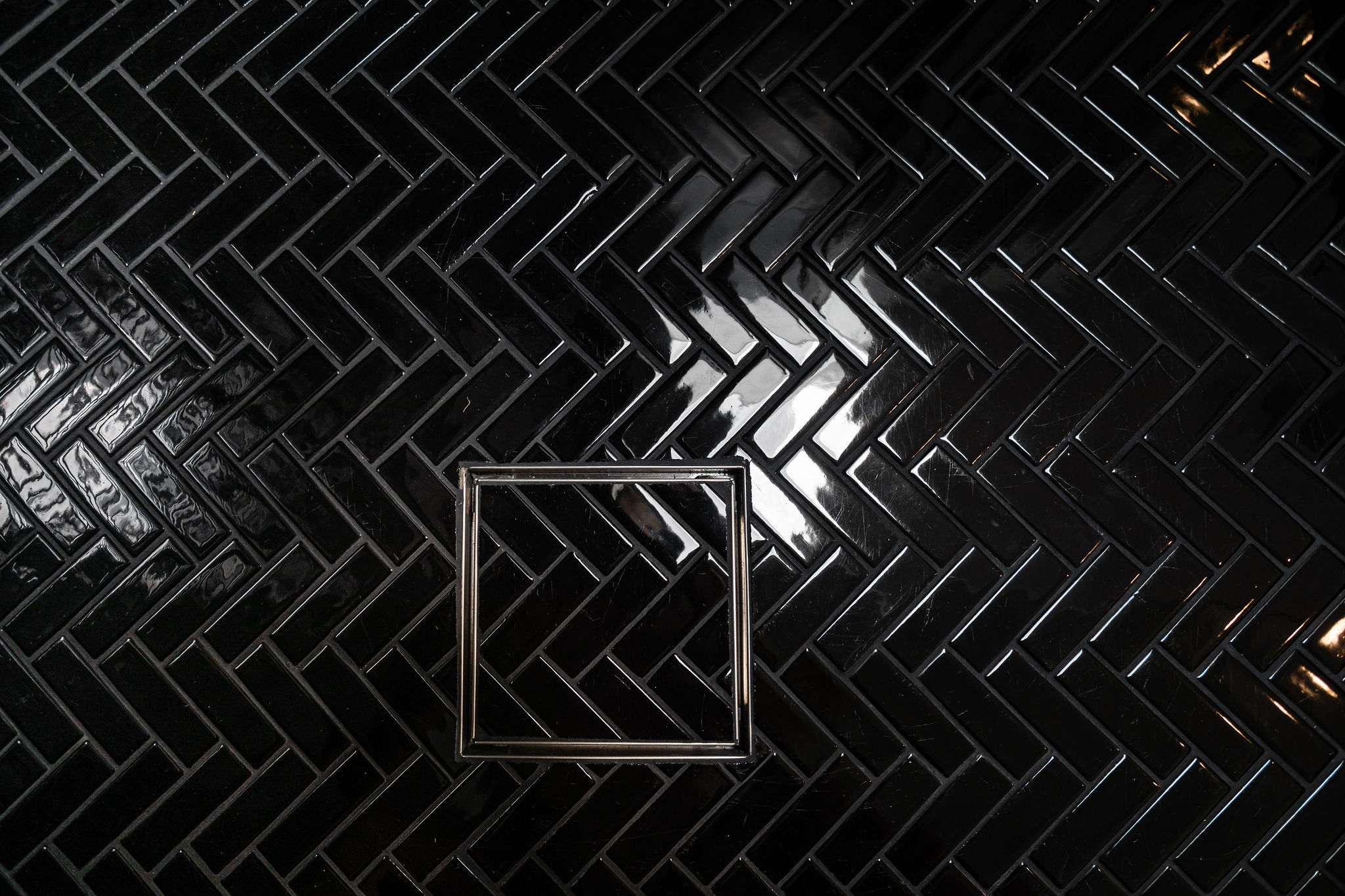
1. Herringbone at 90 Degrees
The classic herringbone pattern, but just tilted 90 degrees. It works well for a taller space, like a shower, to create vertical and horizontal subway tile patterns rather than just one large pattern that can be overwhelming when used in a large and tall space.
The herringbone at 90 degrees also draws the eye up and creates visual interest in the space.
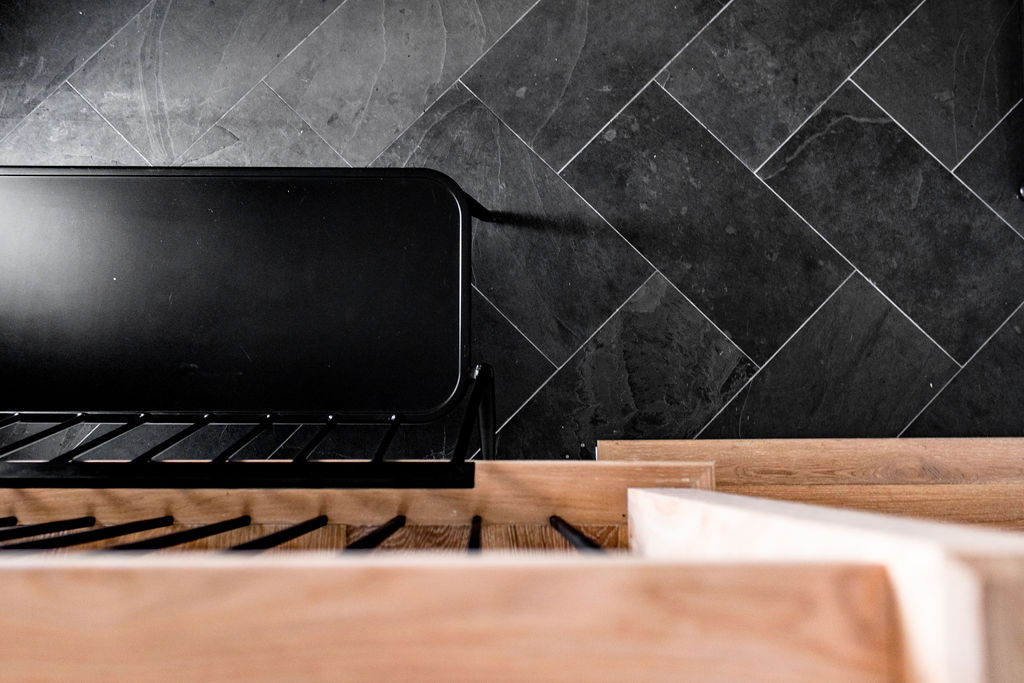
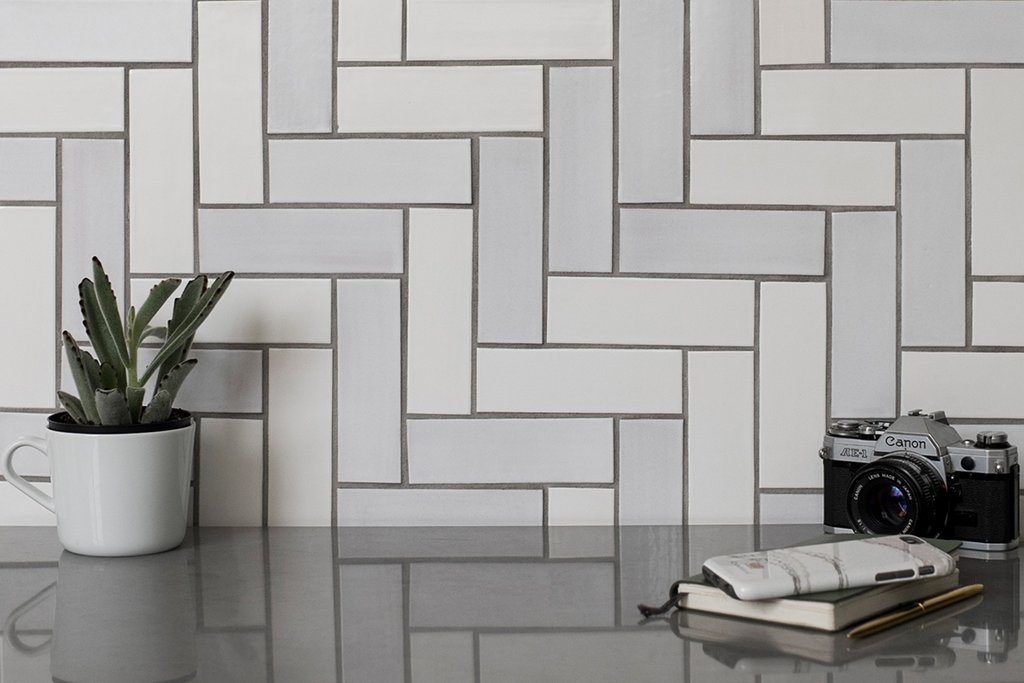
Best for: Kitchen backsplashes and bathroom feature walls. Difficulty: Intermediate. Grout tip: Use a contrasting grout color to show off the angular lines and make the pattern pop.
2. Step Ladder
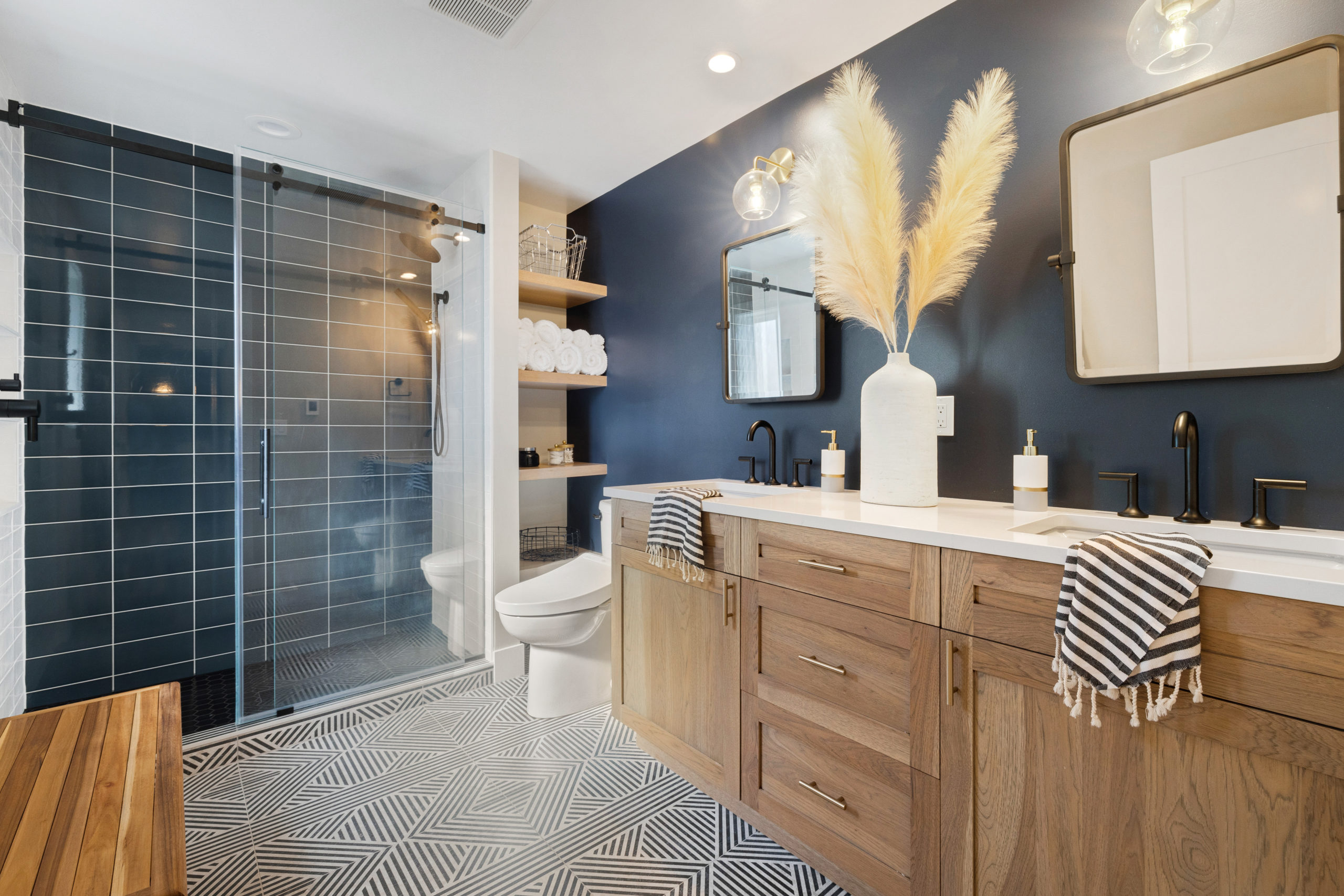
Imagine this look like stepping stones in a step ladder. This one looks awesome in a surround shower pattern and makes the space feel larger and more open.
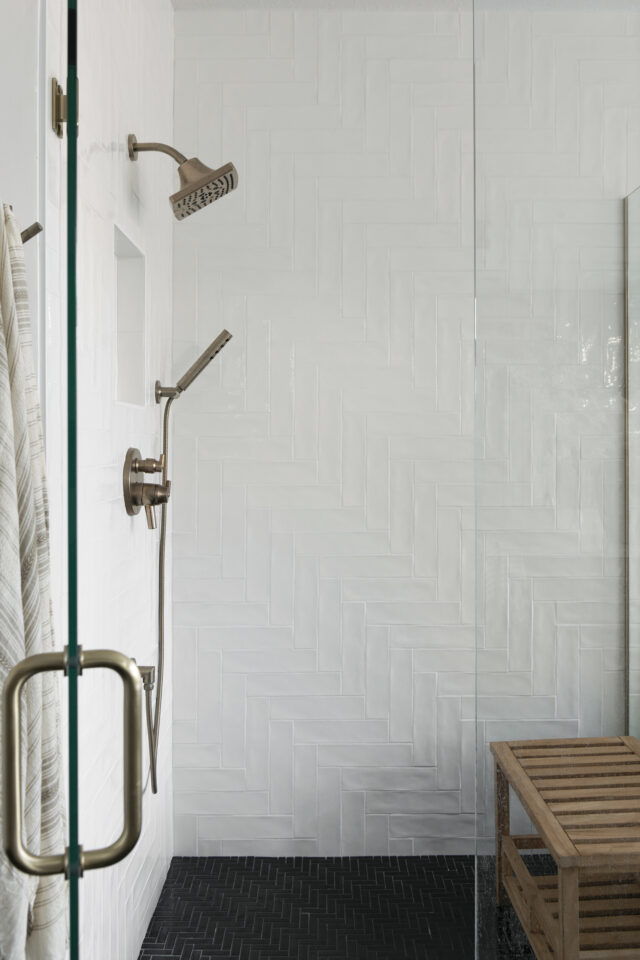
It’s definitely a different layout and not one you see often, however, as you can tell, makes a great statement. Consider the step ladder in a niche in the shower or as a more creative subway tile layout in the kitchen.
Best for: Bathrooms and laundry rooms where you want something unexpected without going full herringbone. Difficulty: Intermediate. Grout tip: A tight grout joint in a matching color keeps this pattern refined rather than busy.
3. Classic Subway
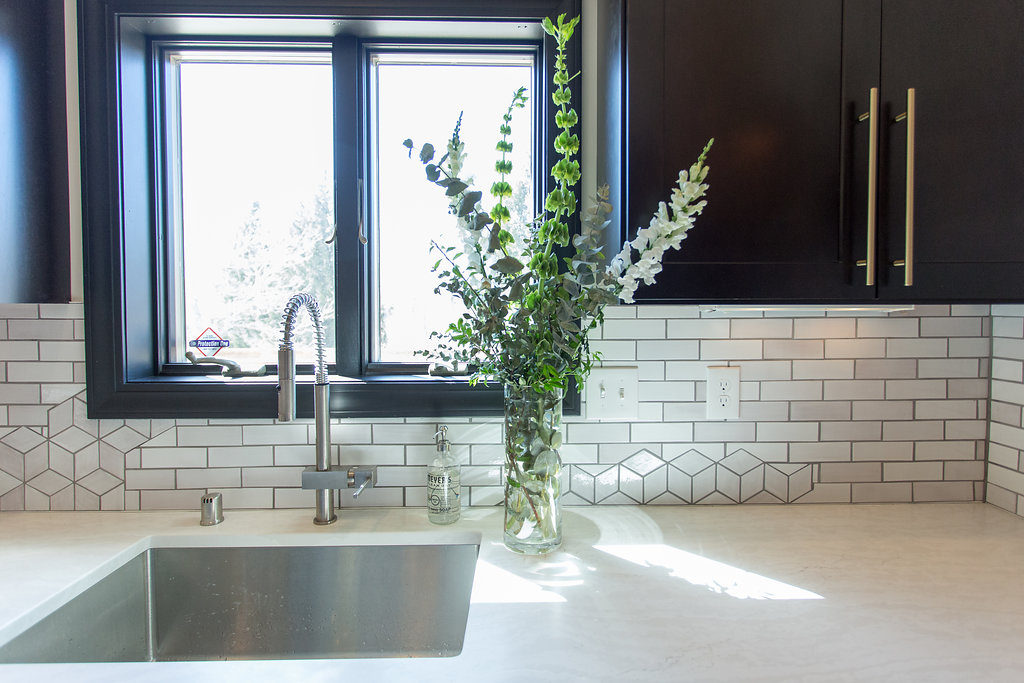
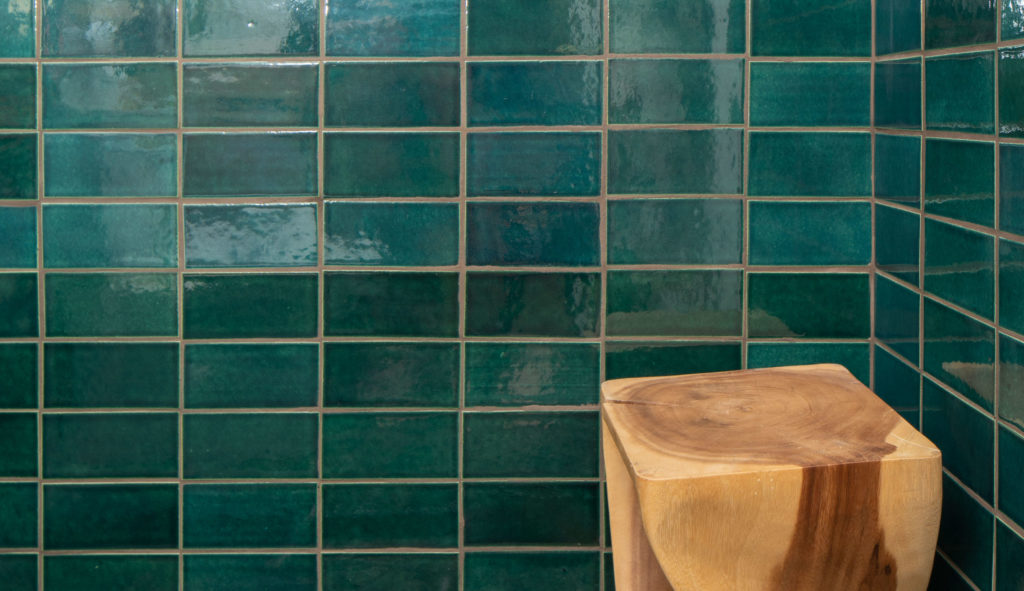
Pictured here is the classic subway tile. In this design, the tile is stacked like bricks. This is how subway tile was first started and adds a classic look to any space.
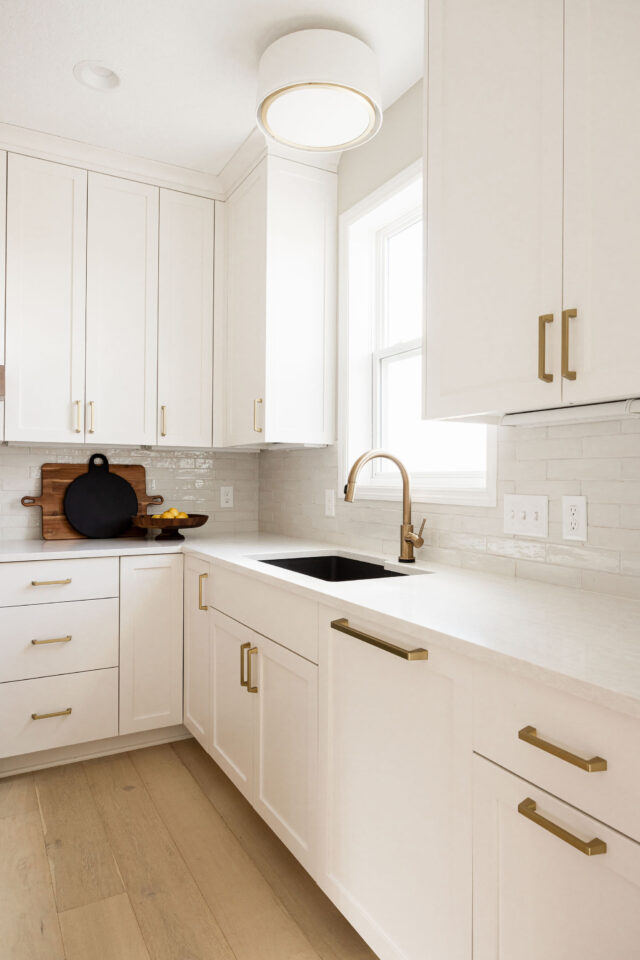
This is what our clients most opt for because it’s timeless and pairs well with other shapes, like the hexagon. We love using a fun pop of color with the classic subway tile pattern.
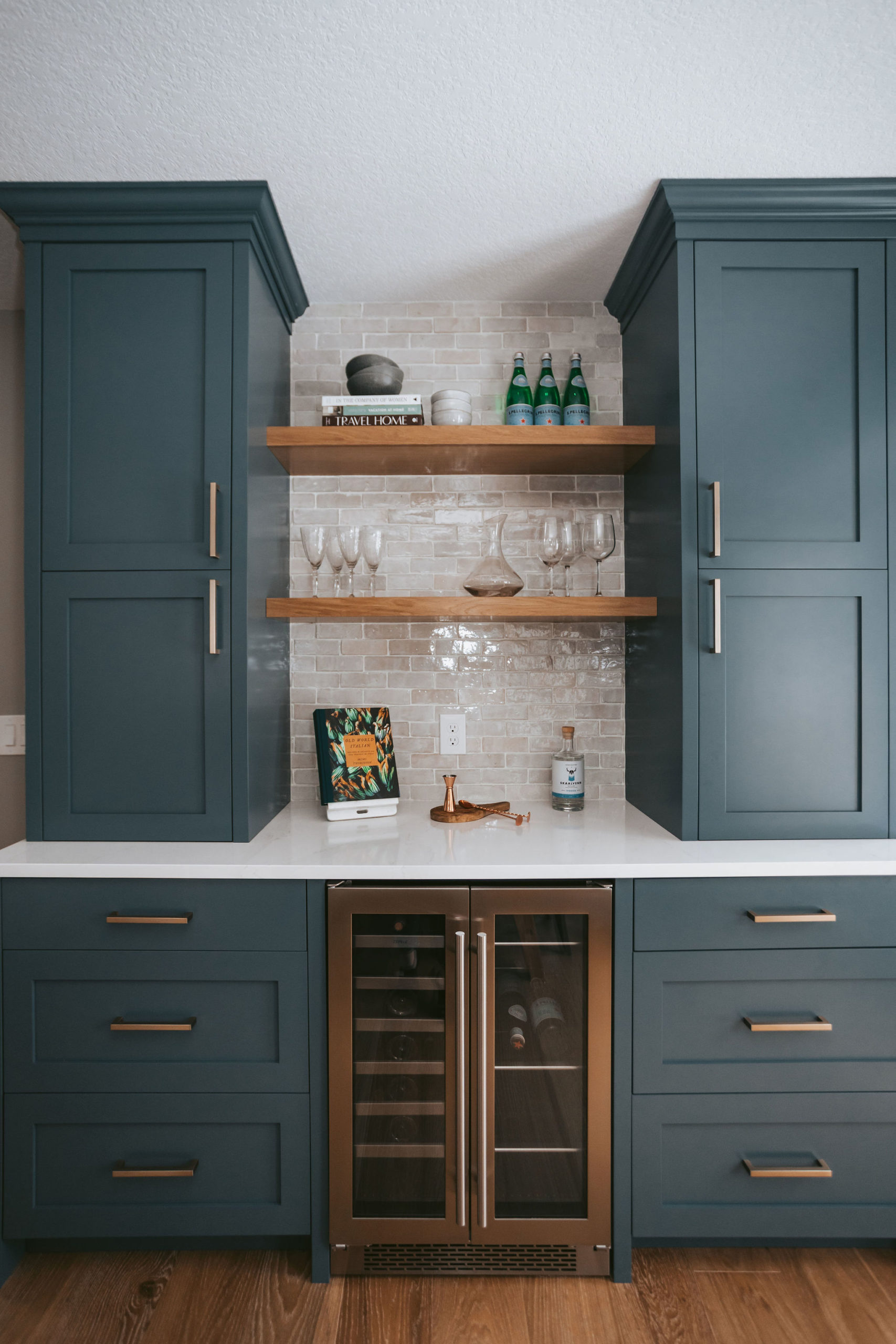
Best for: Any room, any style. This is the workhorse pattern for a reason. Difficulty: Beginner friendly. Grout tip: White grout on white tile reads clean and seamless. Gray grout adds definition and hides everyday grime better.
4. Geometric Look
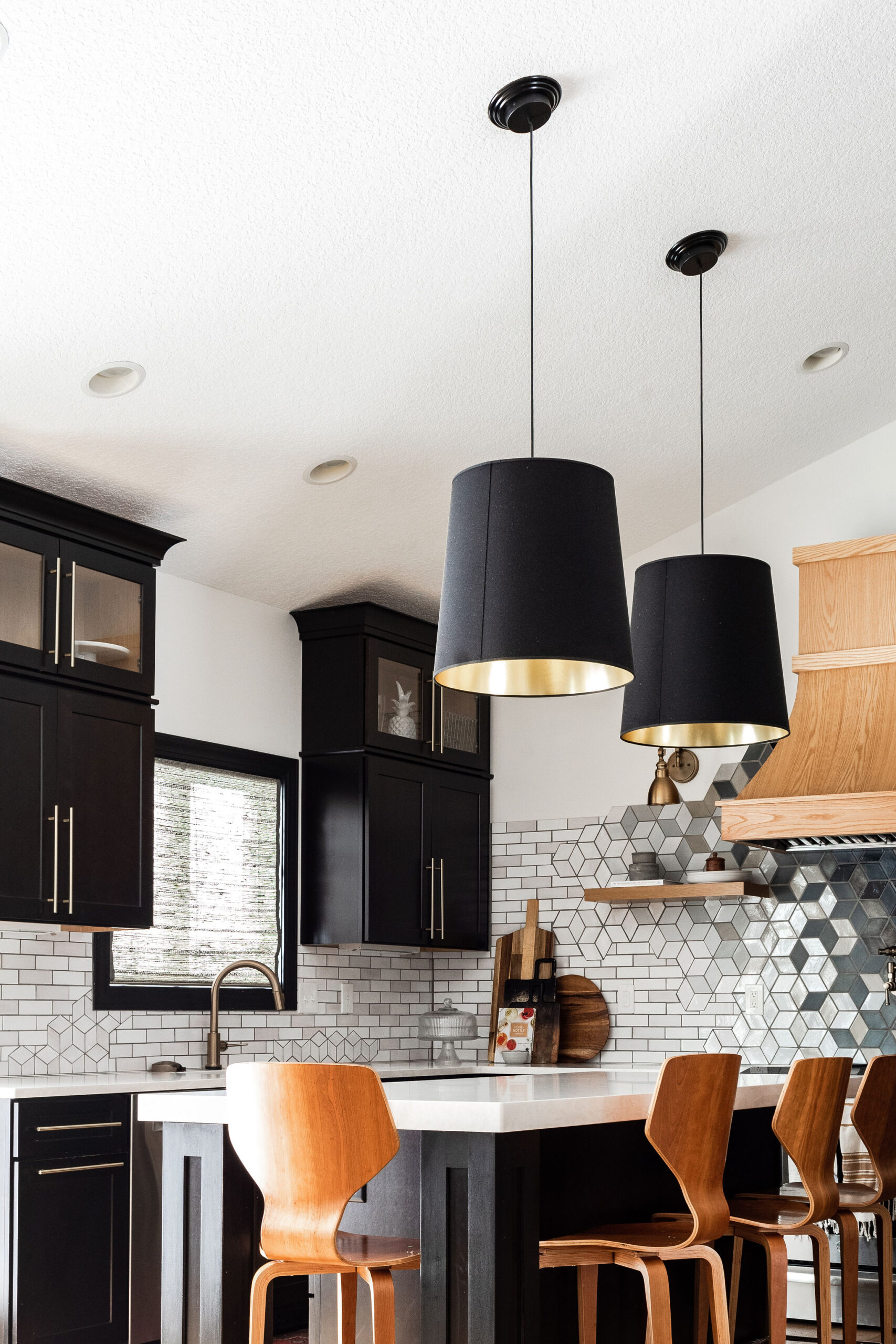
This fun look is easy to create by placing two horizontal tiles next to two vertical tiles. It creates a geometric pattern that adds boldness while still maintaining a classic feel.
We did this one in our kitchen and are in love with how it turned out.
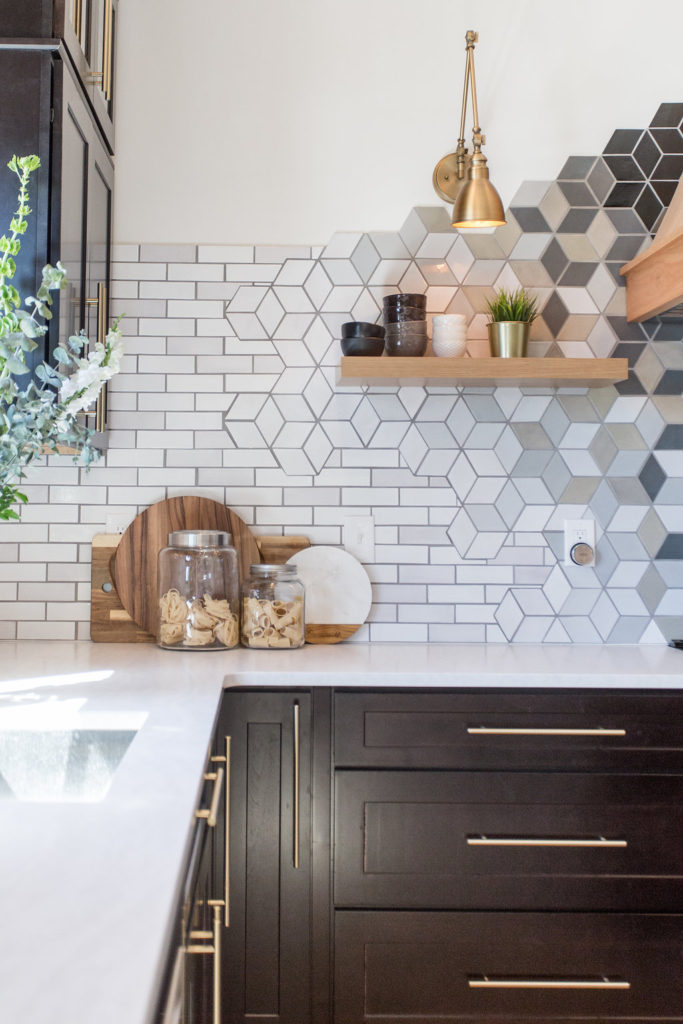
Best for: Statement walls and powder rooms where you want maximum impact in a small space. Difficulty: Advanced. Grout tip: Keep grout color close to the tile so the geometry itself is the star, not the grout lines.
5. Classic at a Diagonal
Shake the classic subway tile patterns up with a little twist! All you do with this is take the traditional subway tile, stack it like bricks, and rotate it at a 45-degree angle.
This twist on the classic adds a surprise in the kitchen because it’s so unique and rather unexpected. The diagonal pattern helps to expand the room while keeping the classic look.
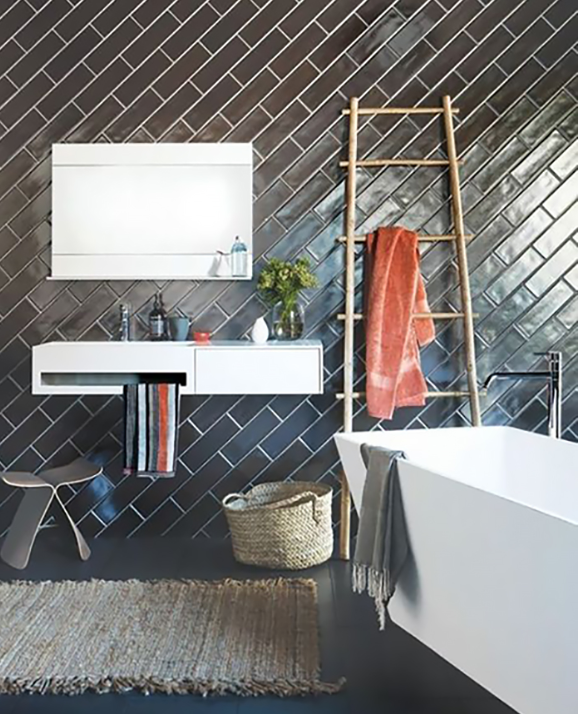
Photo Credit: A Beautiful Mess
Best for: Smaller kitchens and bathrooms where you want to create the illusion of more space. Difficulty: Intermediate. Grout tip: A light gray grout works beautifully here and helps the diagonal lines read without being too stark.
6. Stacked Vertical
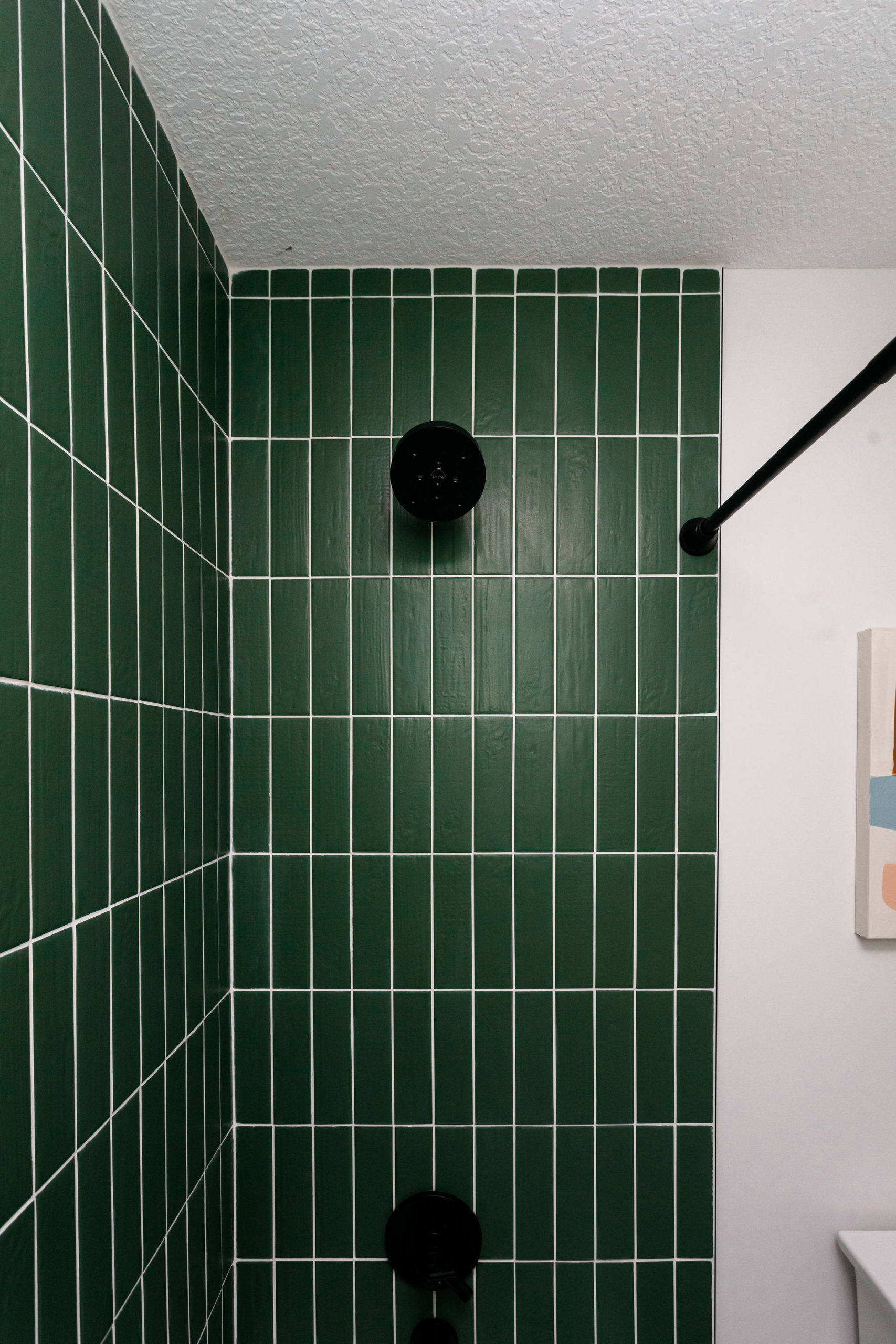
Pretty simple one here, stack the tiles vertically on top and beside each other. Because of the vertical pattern, it can make the ceilings feel taller and work well behind your counters.
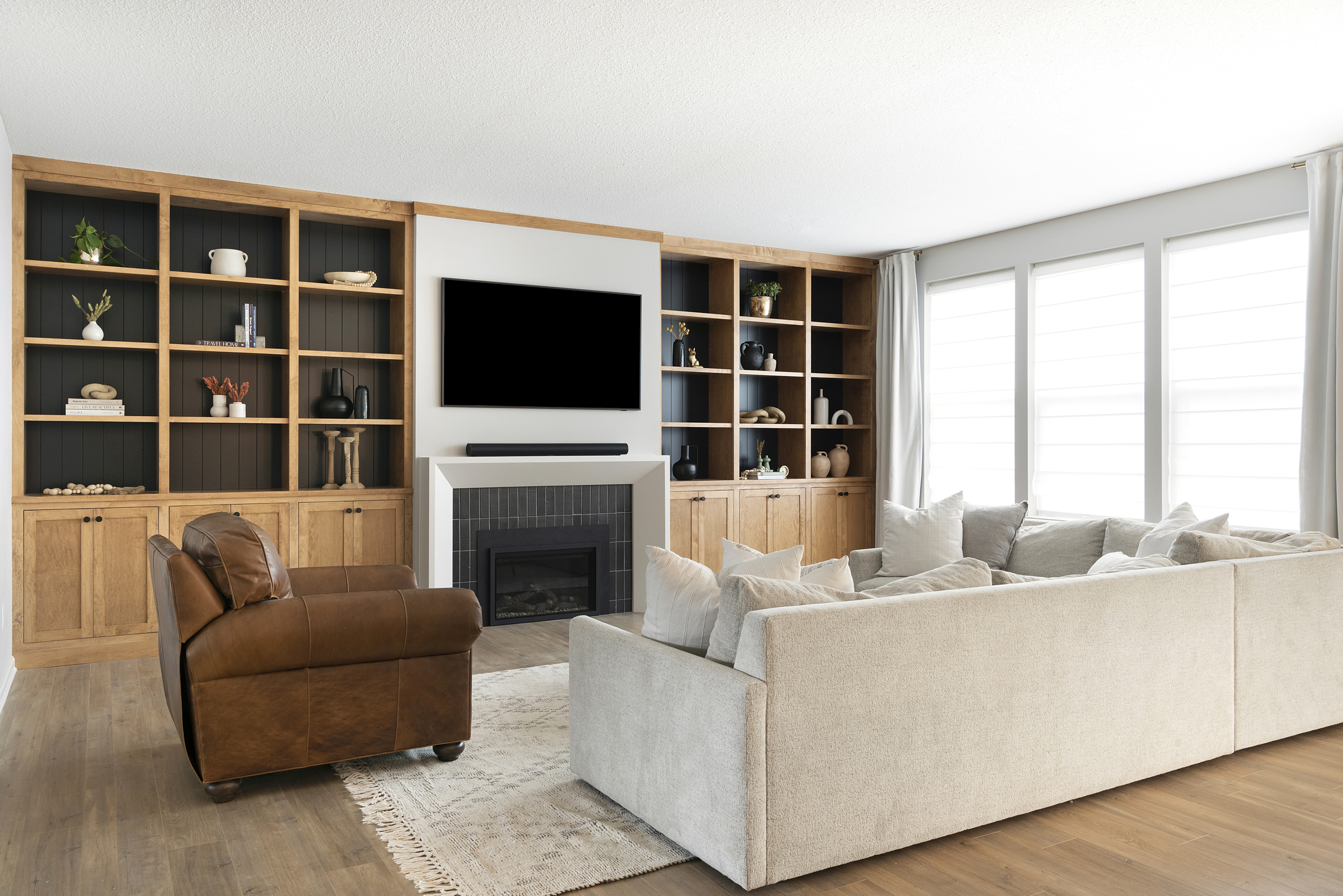
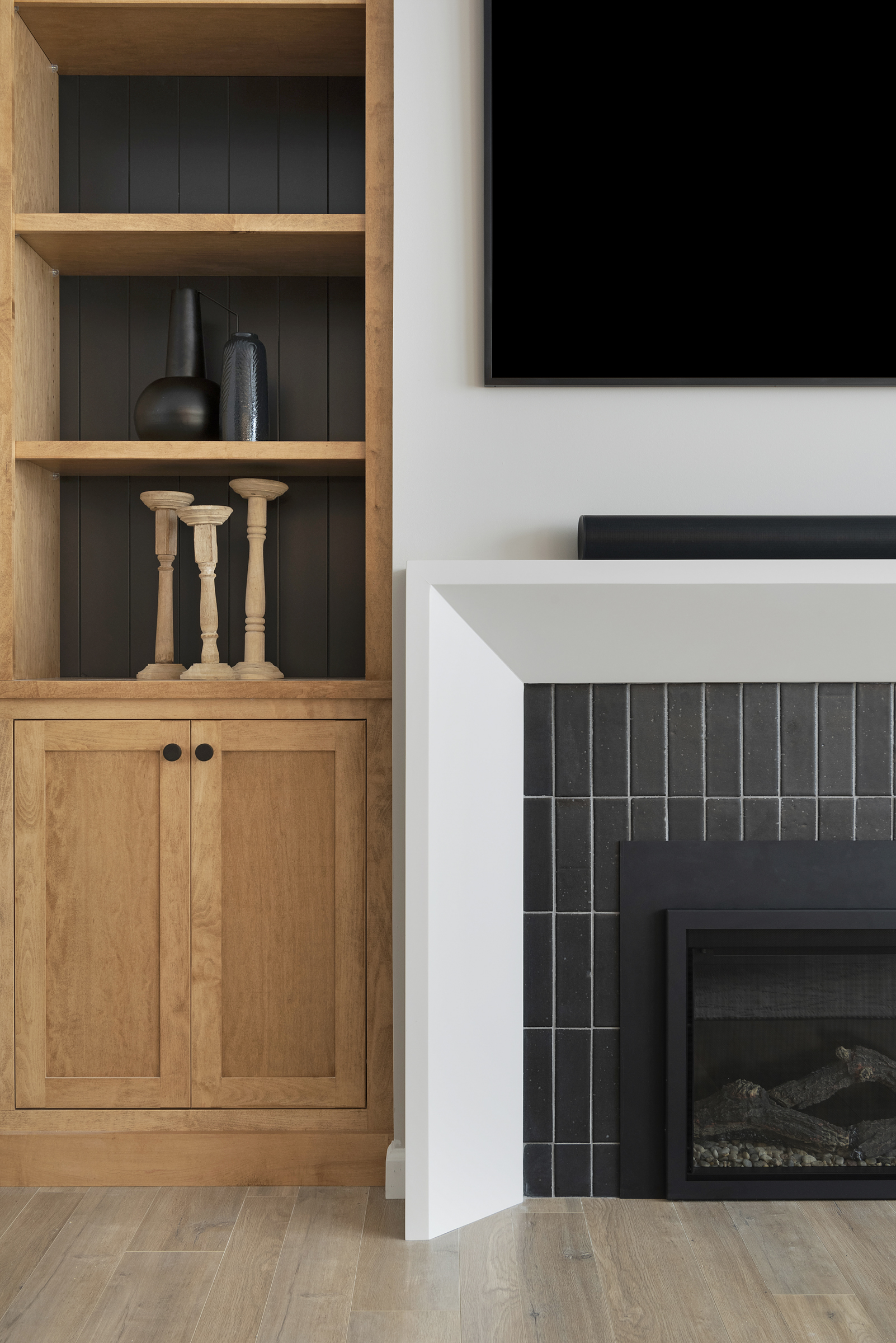
Best for: Behind ranges and in bathrooms with low ceilings. The vertical orientation draws the eye up and adds the feeling of height. Difficulty: Beginner friendly. Grout tip: A slightly darker grout than the tile emphasizes the vertical lines and the effect.
7. 90 Degree Classic
Rotate the classic stacked subway tile 90 degrees, and you’ve got a whole new look to the classic subway tile pattern. This design helps to enlarge the room and makes a statement in your space that’s more fun than the traditional design.
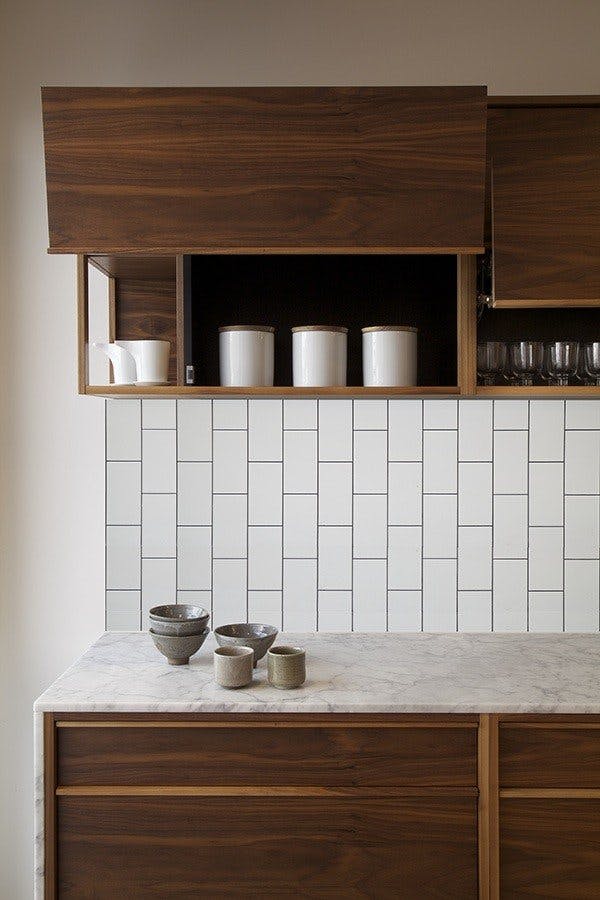
Photo Credit: Apartment Therapy
Best for: Modern and transitional kitchens. This simple rotation gives a fresh feel without adding complexity to the installation. Difficulty: Beginner friendly. Grout tip: Try a bold dark grout here to lean into the graphic, modern look.
8. Stacked Horizontal Tile
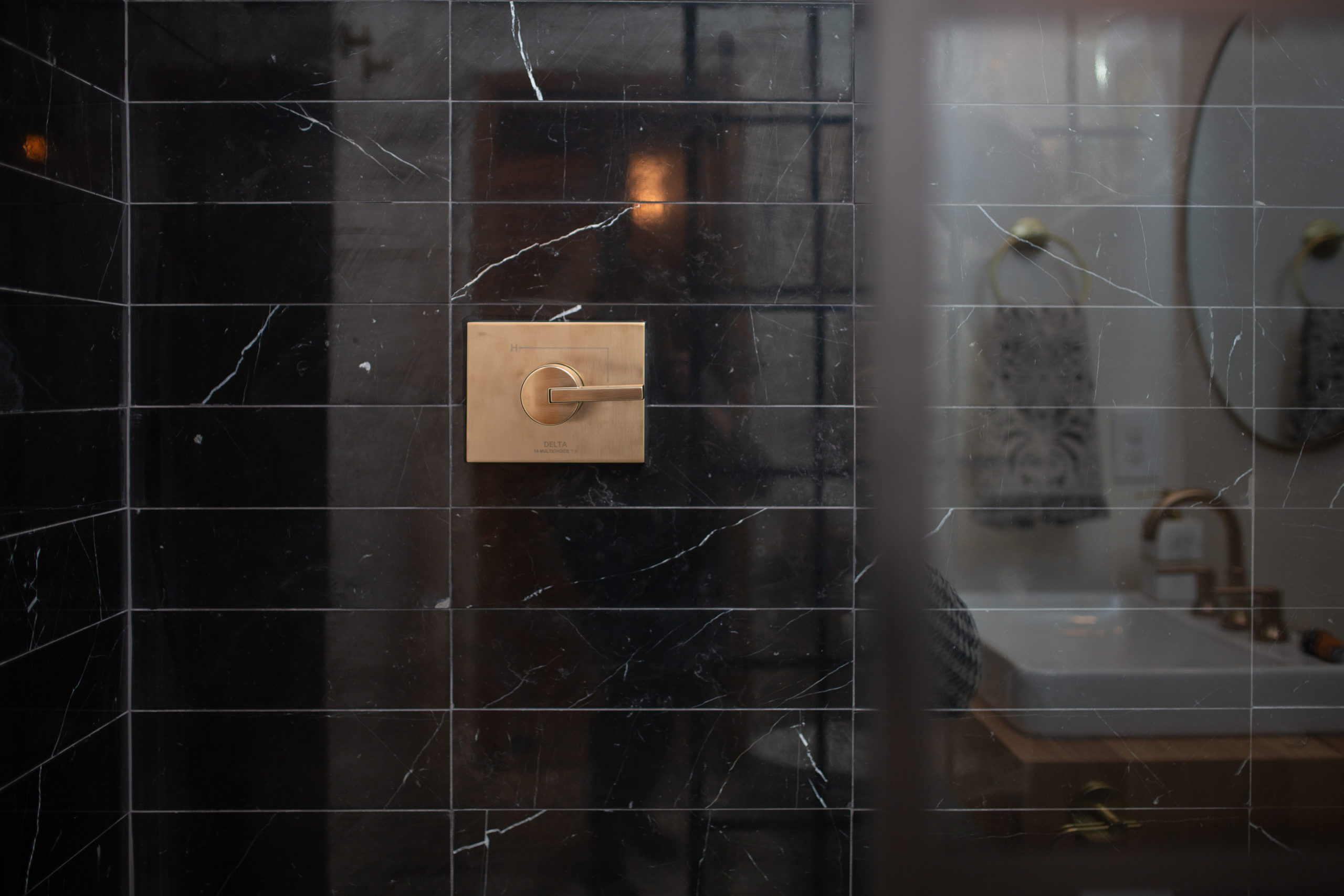
Similar to the stacked vertical, except now the tile is stacked horizontally.
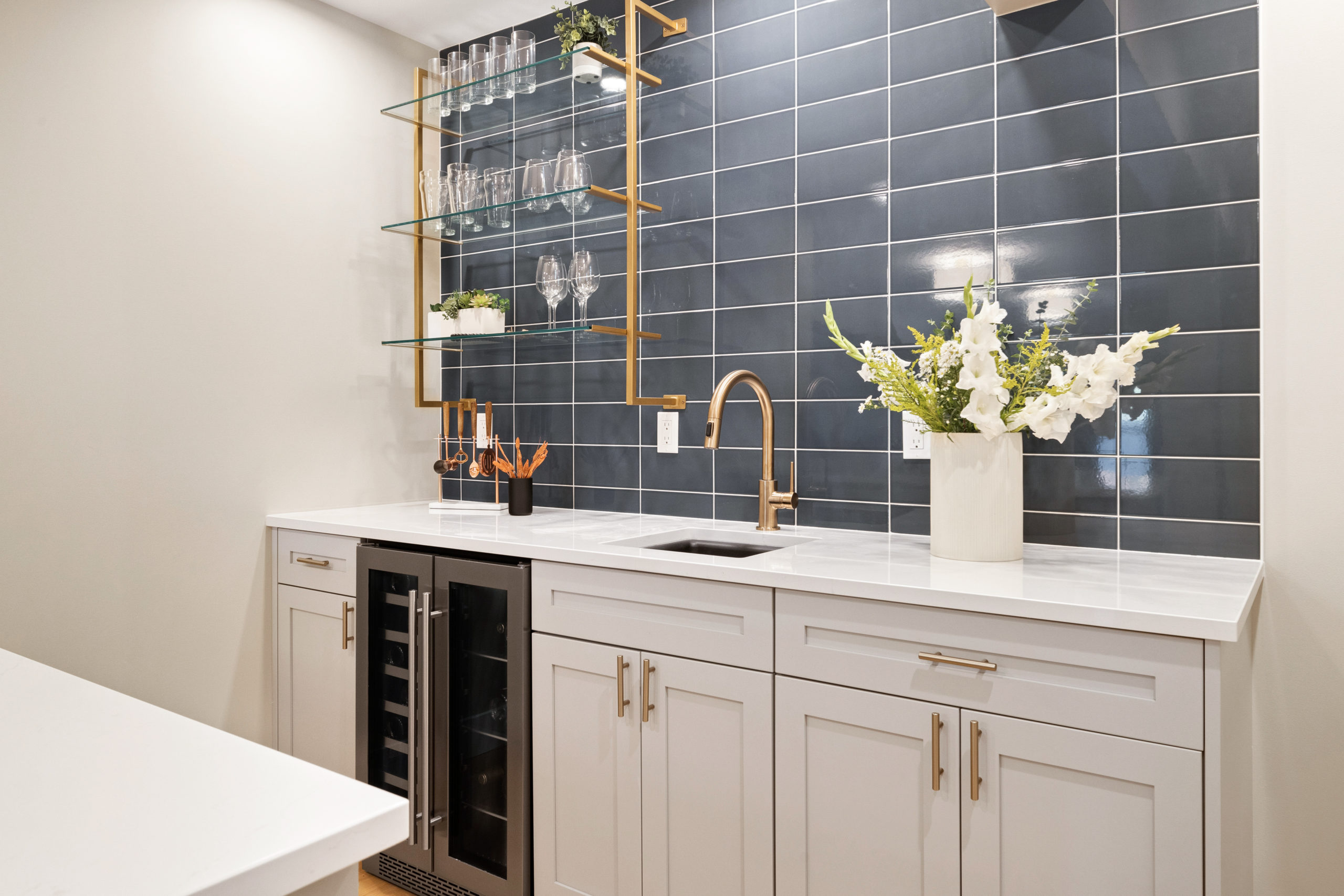
The grout lines are linear and the tile lines up next to and on top of each other. This look works well with a modern design and open wood shelving that creates pleasing horizontal lines throughout the kitchen.
If you love the mid-century modern look or your style is more modern than traditional, this is one of the subway tile patterns for you because of the linear look. We recently used the horizontally stacked tile in one of our favorite bathroom remodels.
Below we paired a custom tile from Mercury Mosaics with a fun bold wallpaper.
Check out more on that project HERE.
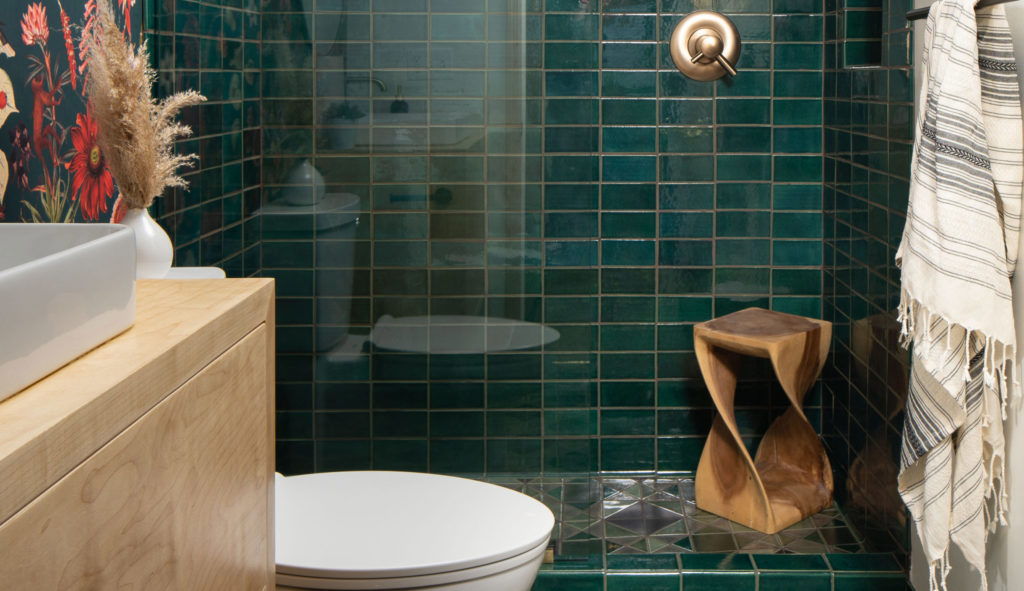
Best for: Contemporary spaces and long, narrow backsplash runs. Clean horizontal lines feel especially right in a modern kitchen. Difficulty: Beginner friendly. Grout tip: Match grout closely to the tile for a sleek, minimal look.
9. Stacked Vertical – Alternating
Create a visually interesting shower wall by using the vertically stacked subway tile pattern, but then offset the rows. This pattern is a more modern look and therefore works well with full tile walls, like in a bathroom or as a statement wall in the kitchen or by the hood.
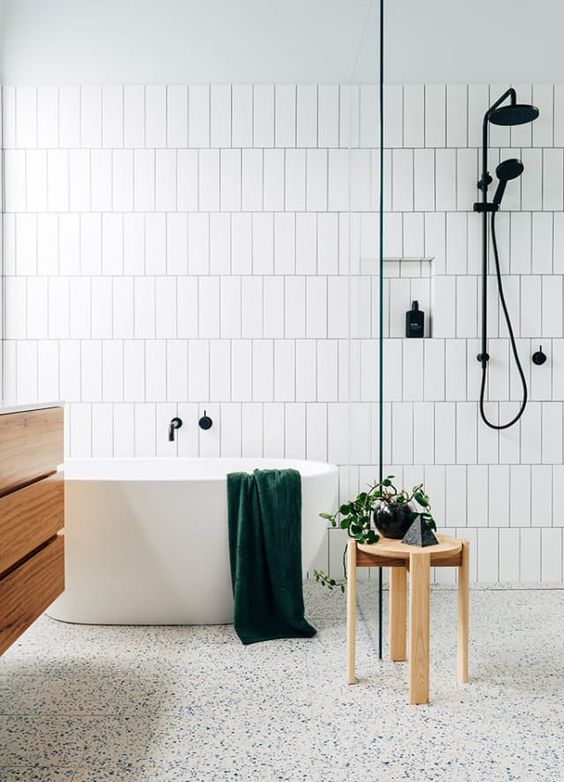
Photo Credit: Apartment Therapy
Best for: Bathrooms and feature walls where you want a little movement without full herringbone complexity. Difficulty: Intermediate. Grout tip: A contrasting grout makes the alternating rhythm much more visible and intentional.
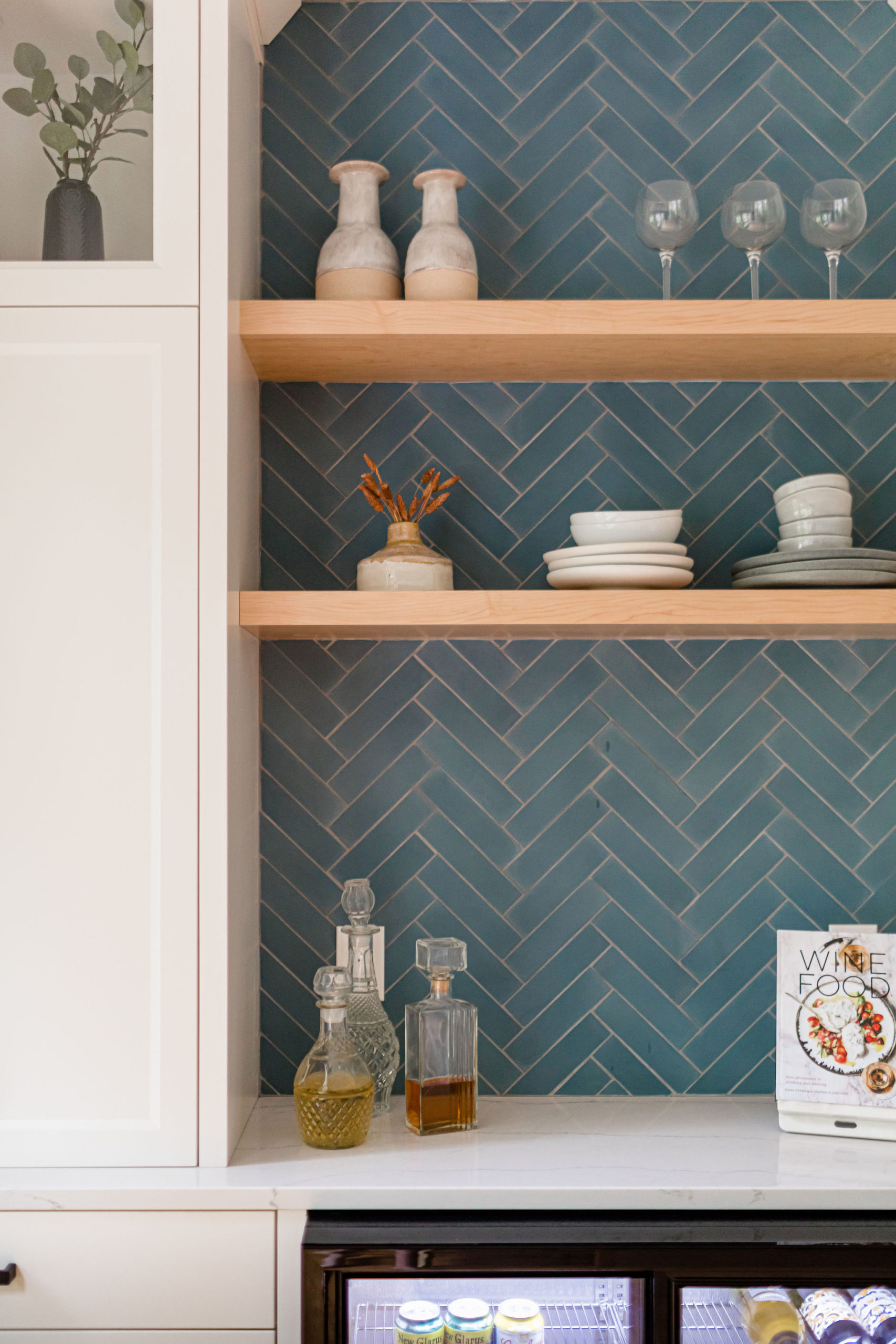
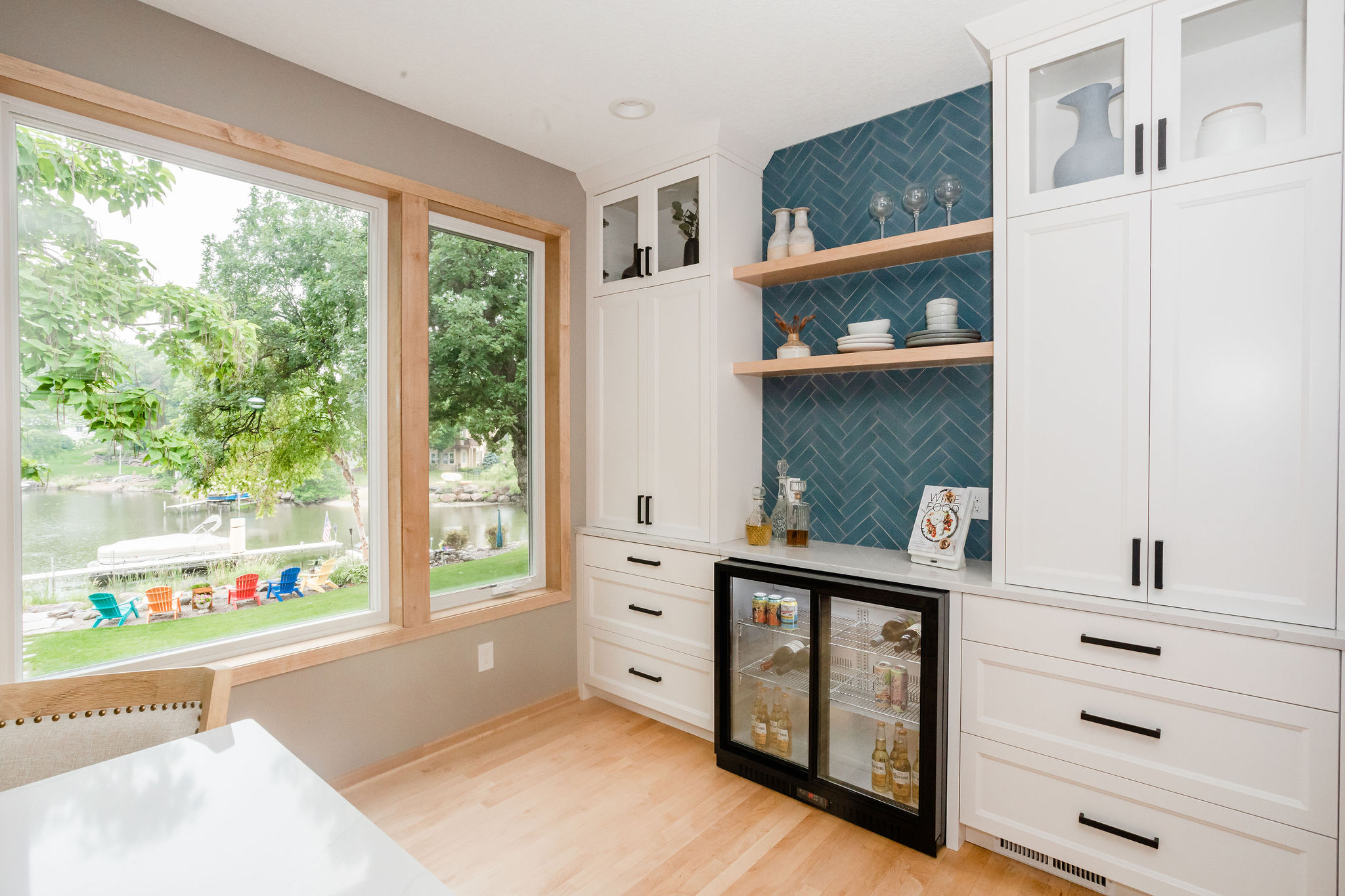
10. Classic Herringbone
One of our favorites that give subway tile a whole new look! The tiles are diagonal and create a cool pattern. It makes any wall pop and works as an accent wall.
We do the herringbone pattern a lot for our own homes and for clients’ floor tile. It’s a classic look that I don’t think will ever go out of style.
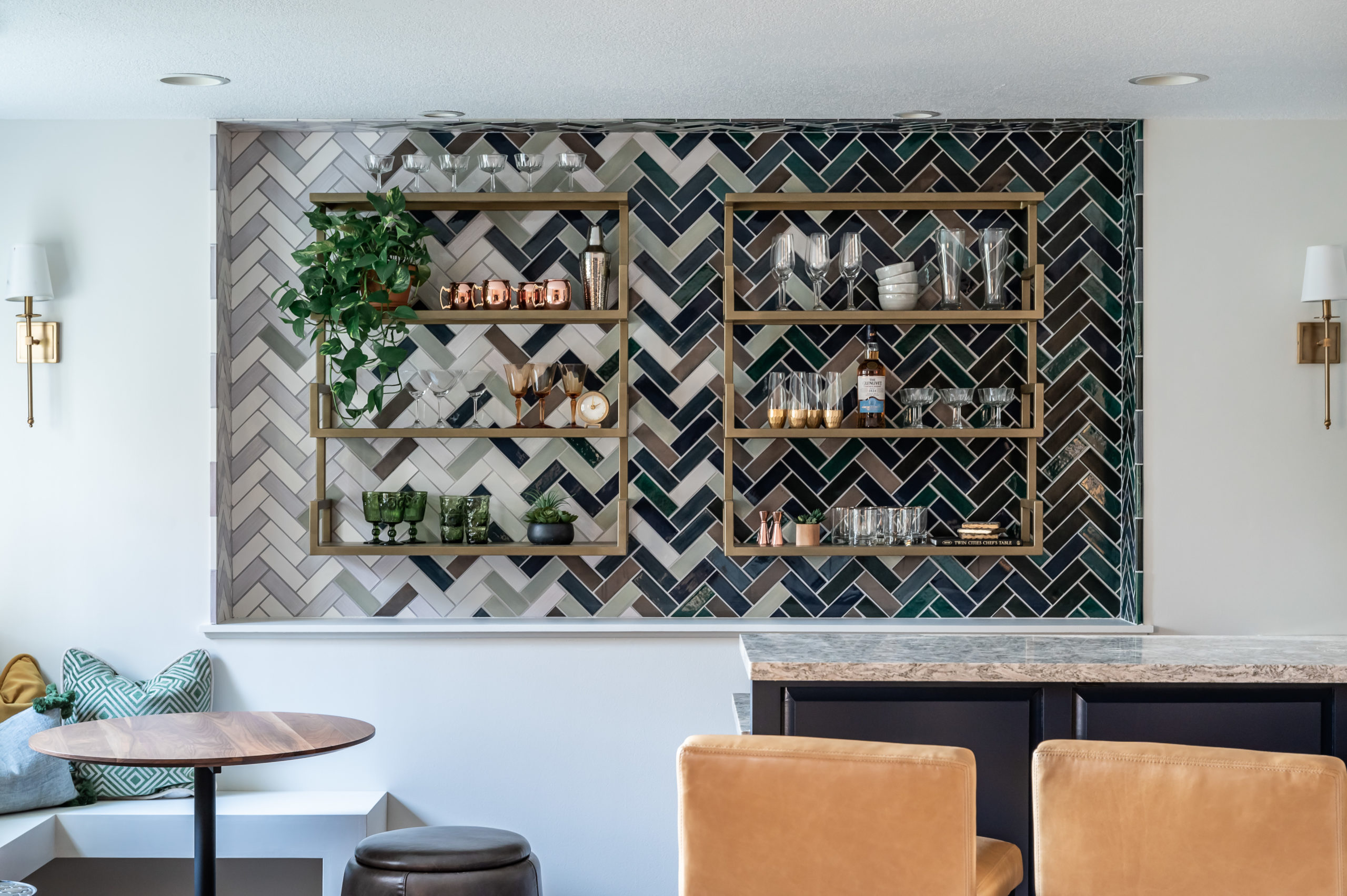
For the project below, we used handmade tile to create this herringbone pattern and it added a unique element to this kitchen refresh. The white tile is accented by “whisper gray” grout, making this classic herringbone pattern stand out. “The grout line is half the design. You can take the same tile and make it feel vintage or modern just by changing that contrast.” — Tim Brown, Owl Roofing
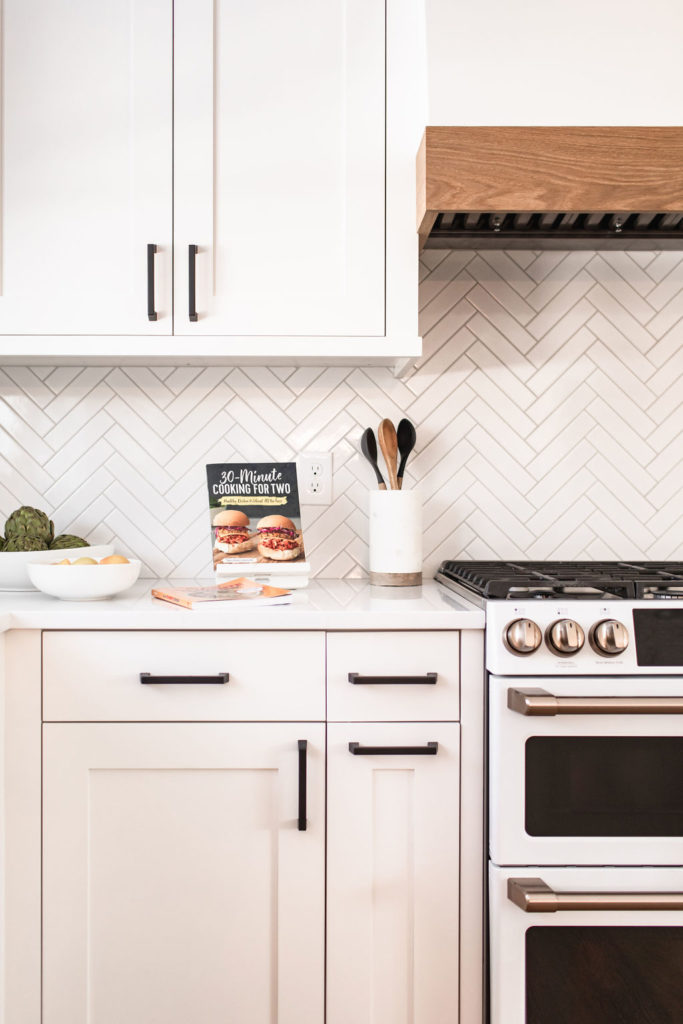
Best for: Bathrooms, entryways, and kitchen backsplashes. One of the most timeless patterns you can choose. Difficulty: Intermediate. Grout tip: White or light gray grout keeps it classic. A black grout line gives it a much more dramatic, modern feel.
11. Stacked Horizontal – Alternating
Just like the stacked vertical alternating, alternate the tiles horizontally. This classic look is still able to create a unique pattern, it will make your laundry room or bathroom appear chic and elegant.
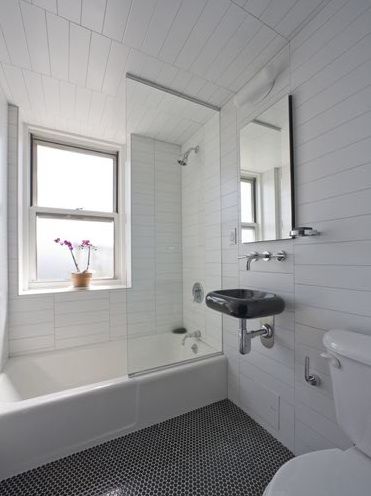
Best for: Wide backsplash areas and full bathroom walls. The horizontal rhythm suits longer spans especially well. Difficulty: Intermediate. Grout tip: A warm greige grout adds depth without competing with the pattern.
12. Herringbone at 45 Degrees
For this look, take #10 and rotate it 45 degrees. This is a good pattern for a smaller bath or kitchen because it keeps your eyes moving throughout the room making it seem bigger.
It’s also a great way to draw the eye around the room or direct attention to a specific element in the space.
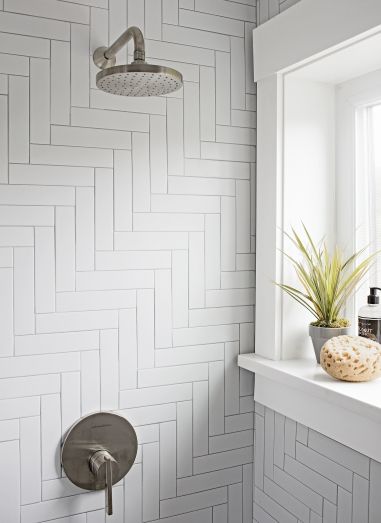
No matter which of the subway tile patterns you choose, you can’t go wrong! Shake it up and have some fun with it. Even if you incorporate the classic subway tile in the classic design, try to include some other fun tiles and layouts.
Ready to get tiling? We have a video tutorial too.
Best for: Feature walls and showers where you want a dynamic, eye catching pattern. Difficulty: Advanced. Grout tip: Keep the grout simple and close to the tile color. The pattern itself is already doing a lot of work.
How to Choose the Right Subway Tile Pattern
Think about the room size. Diagonal patterns and herringbone at 45 degrees make smaller spaces feel larger by drawing the eye across the room. Vertical stacking adds height in rooms with lower ceilings. Horizontal stacking works best in wider spaces.
Match the pattern to your style. Classic running bond and stacked horizontal suit traditional, transitional, and modern spaces equally well. Herringbone and geometric patterns lean more contemporary and work best when the rest of the room is fairly simple so the tile can be the focal point.
Consider your skill level or your installer’s. Running bond, stacked horizontal, and stacked vertical are all beginner friendly and forgiving to lay. Herringbone, diagonal, and geometric patterns require more precise cuts and planning and are better suited to experienced installers.
Factor in grout line visibility. Patterns with more directional movement, like herringbone, benefit from a grout color that complements rather than competes. If you want the tile to read as one clean surface, match the grout closely to the tile color. If you want the pattern to be bold and graphic, go darker on the grout.
Think long term. Trendy patterns are fun but classic running bond and simple stacked layouts have the longest staying power. If you are renovating to sell, stick to patterns with the broadest appeal.
Grout Color Guide for Subway Tile
Grout is one of the most underestimated decisions in a tile project. The same pattern can look completely different depending on what grout you use. Here is a quick guide to the most common combinations.
White tile with white grout. This is the classic, seamless look. The tile surface reads as one continuous plane, which is clean and timeless. The downside is that white grout shows staining over time, so sealing it regularly matters.
White tile with gray grout. The most popular combination for a reason. Gray grout adds definition to the pattern, hides everyday grime much better than white, and works in both traditional and modern spaces. Light gray reads subtle. Dark gray or charcoal reads bold and graphic.
White tile with black grout. High contrast and very striking. This combination is best for kitchens and bathrooms with a modern or industrial aesthetic. It shows the pattern clearly and makes a real statement.
Colored tile with matching grout. When you go into a colored subway tile, matching the grout closely creates a rich, cohesive look. The color becomes the feature rather than the grout lines. This works especially well with jewel tones like navy, forest green, and terracotta.
Grout width matters too. A 1/16 inch joint reads very sleek and modern. A 1/8 inch joint is the standard and works with most patterns. A wider joint gives a more handmade, rustic feel that suits farmhouse and cottage styles well.
Frequently Asked Questions About Subway Tile Patterns
What is the most popular subway tile pattern?
The classic running bond, also called the brick pattern, is still the most widely used. It is beginner friendly, works in any style of home, and never really goes out of fashion. Herringbone is a close second and has become very popular in kitchen backsplashes over the last several years.
Which subway tile pattern is easiest to install?
Running bond, stacked horizontal, and stacked vertical are the most straightforward to install because the cuts are simple and the layout is forgiving. Herringbone and diagonal patterns require more precise angles and are better left to experienced tile setters.
What subway tile pattern makes a room look bigger?
Diagonal patterns and herringbone at 45 degrees draw the eye across the room and create a sense of movement that makes spaces feel larger. Vertical stacking adds height. Avoid overly busy patterns in very small rooms as they can make the space feel more closed in.
What size grout line should I use for subway tile?
The standard is a 1/8 inch grout joint, which suits most patterns and styles. For a sleeker, more modern look go tighter at 1/16 inch. For a more traditional or farmhouse feel, a slightly wider joint at 3/16 inch reads well.
Can subway tile be used on floors?
Standard glazed subway tile is not rated for floors because it is too slippery when wet and does not hold up well to foot traffic. If you want the subway tile look on a floor, look for floor-rated versions with a matte or textured finish and a slip resistance rating.
What is the difference between herringbone and chevron?
Both create a zigzag pattern but they are laid differently. Herringbone uses rectangular tiles arranged in an L shape so the ends butt up against the sides of adjacent tiles. Chevron uses tiles cut at an angle so the points meet in a continuous V shape. Herringbone is more forgiving to install. Chevron requires precise angled cuts on every tile.
How to Tile Video Tutorial


8 thoughts on “12 Different Subway Tile Patterns & How to Lay Them”
Comments are closed.