A stair runner is one of the most practical and highest-impact upgrades you can make to a staircase. It protects the wood, reduces noise, improves traction, and instantly adds warmth and personality to a space that often gets overlooked. If you have hardwood stairs and they feel loud, cold, or bare, a runner is almost always the right answer. This post walks through our six favorite styles plus everything you need to know about materials, installation, and how to choose the right one for your home.
Benefits
Some of the benefits to stair runners are that they help with noise on the stairs. With the additional padding and fabric of the stair runner, it can significantly reduce or eliminate the noise when someone moves up and down the stairs.
They also help with safety on the chairs by providing traction and more comfortable footing by cushioning the steps. It will also help with maintaining the quality of your wood since the stairs get a lot of traffic.
Installing a runner will protect the stair finish and prevent wear and tear. And they also add style and character to your home since there’s a large variety of patterns and colors that can be installed as a stair runner.
How to Choose the Right Stair Runner
There are a few decisions to make before you buy, and getting them right upfront saves a lot of headaches later.
Width. Most standard staircases work with a runner that is 27 to 32 inches wide, leaving three to four inches of exposed wood on each side. Wider staircases may need a 36 inch runner. Measure your stairs before you order, and decide how much exposed wood border you want showing.
Length. Measure each tread and riser, multiply by the number of steps, and add about 12 inches of extra for tucking and any adjustments. It is always better to have a little extra than to come up short.
Material. Wool is the gold standard for stair runners. It is naturally durable, comfortable underfoot, and ages beautifully. Wool blends offer similar softness with added durability at a lower price point. Synthetic options like nylon and polyester are easier to clean and hold up well in high-traffic homes with kids and pets.
Pattern scale. Small patterns can look busy from a distance on stairs. Larger scale patterns, stripes, and geometric designs tend to read better on a staircase where you are seeing the runner from multiple angles at once.
Installation method. Runners can be installed with tack strips (more permanent, cleaner look) or with stair rods (more traditional, easier to remove and wash). Both work well, so it mostly comes down to the aesthetic you want.
Fabric and Fibers: Wool Carpet Runners for Stairs
Wool is a great material for runners since it is soft, durable, and long-lasting. Since the stairs are a high traffic area, flatter wool will hold up better.
Wool blends, like wool with polyester or nylon, keeps the softness but makes the material even stronger.
Other options include synthetic materials, like nylon and polyester, which are made to last. They are often easier to clean and can be made in a variety of colors and patterns.
Finally, natural fibers, like jute and sisal, are a more casual look but can be harder to clean.
Here are some of our favorites for stair runners:
Beige & Cream – Stark’s Nerium Carpet in Linen

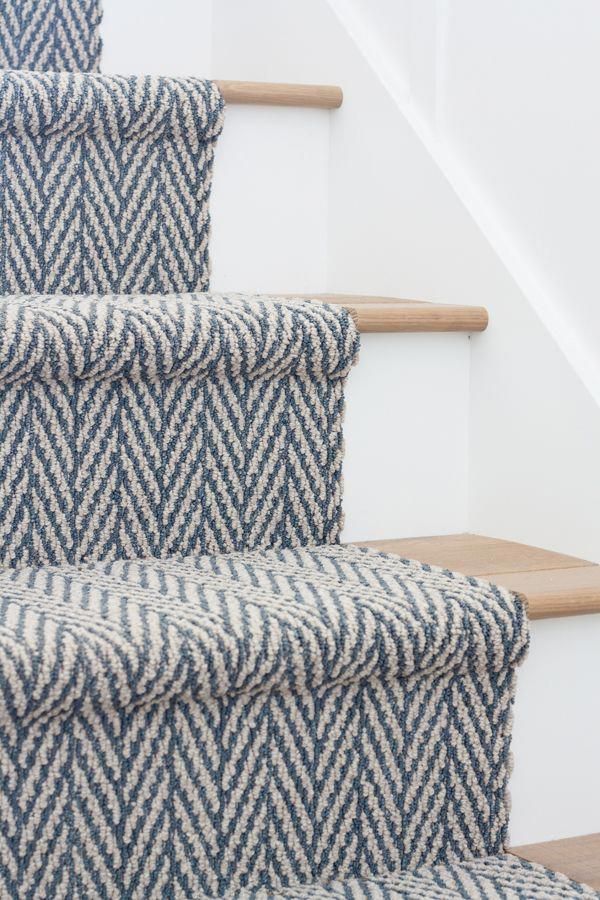
Touch of Blue – Andersen Tuftex, Only Natural II in Capri
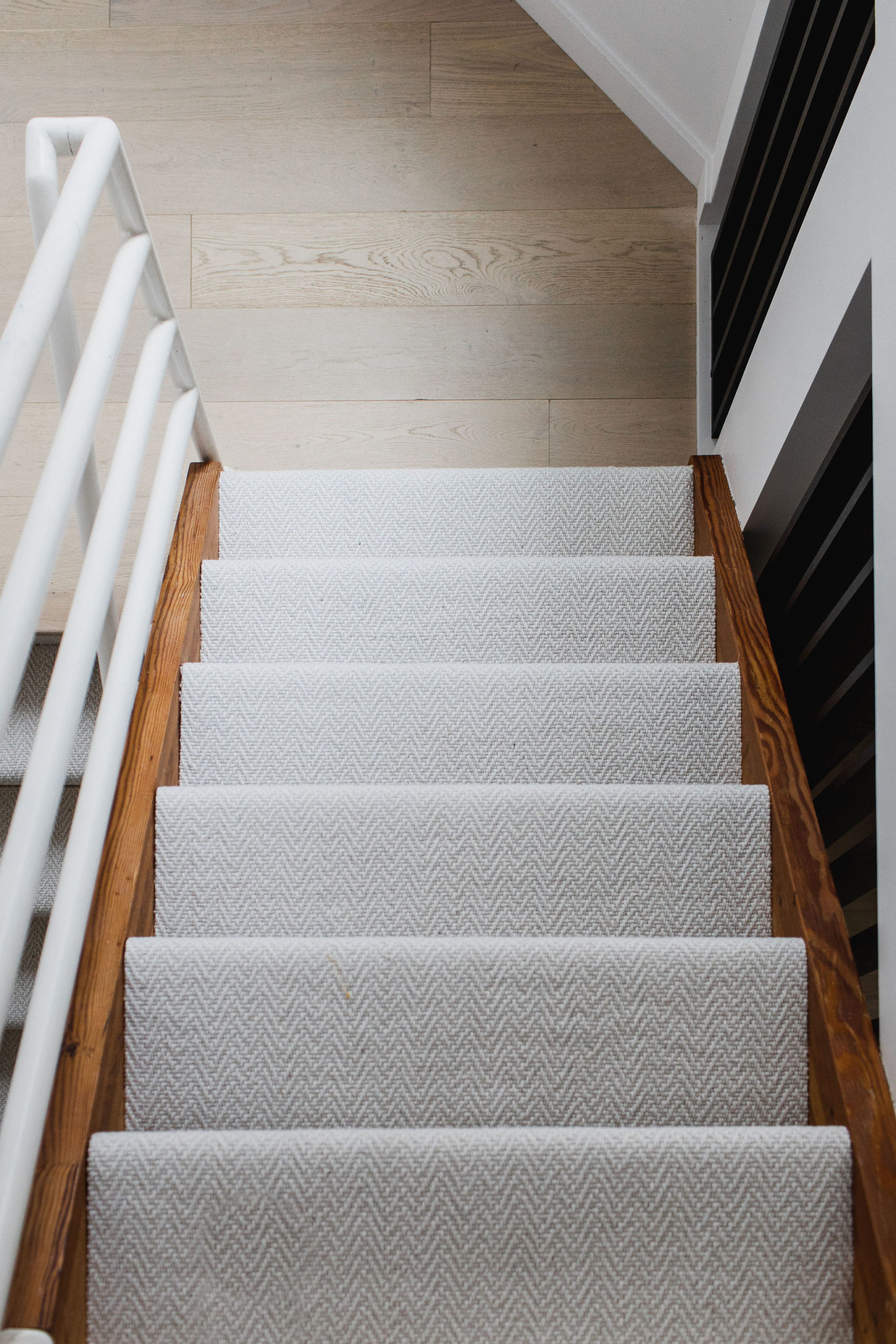
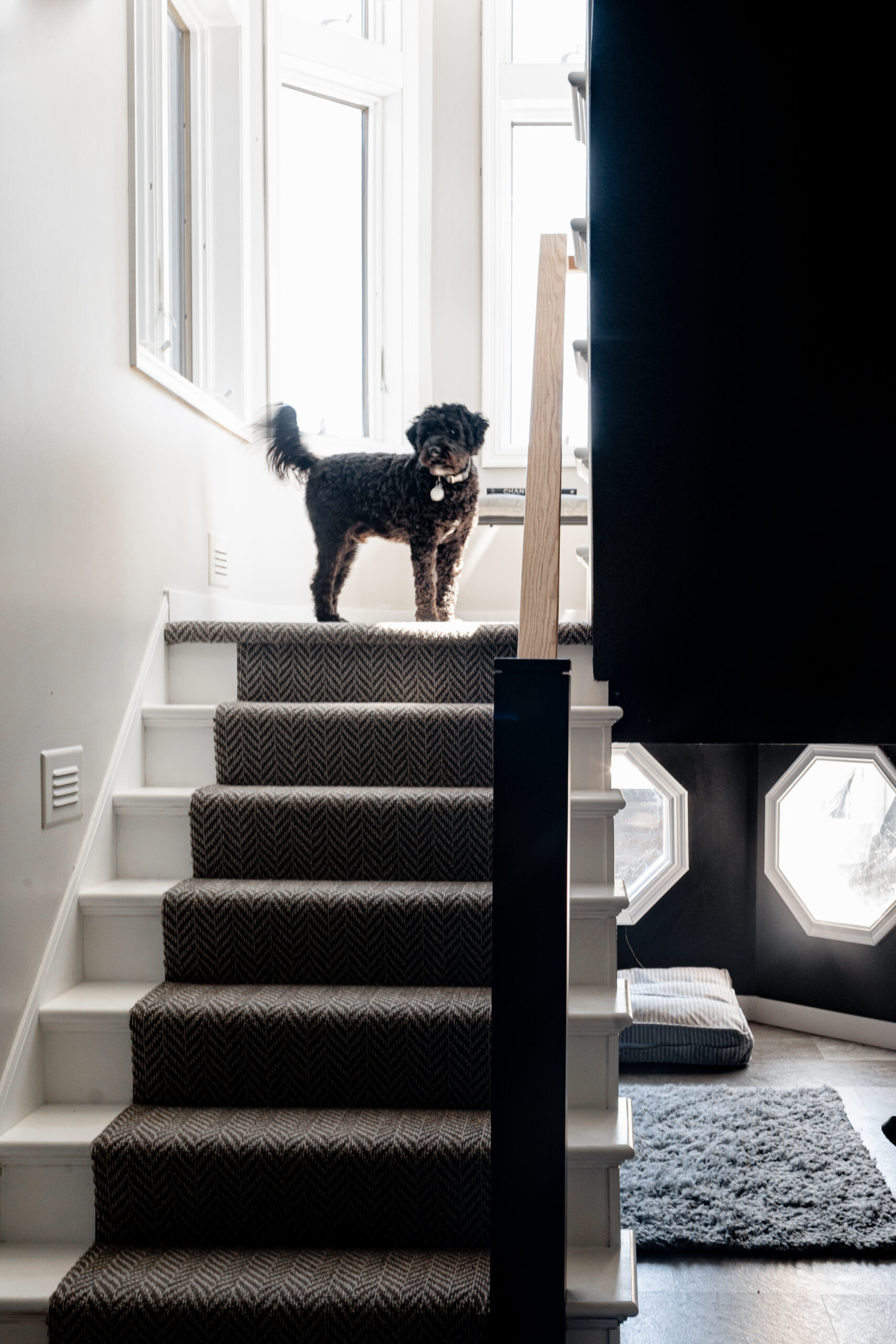
Neutral Herringbone with Bold Stripe – Peter Island Stripe Stair Runner in Graphite
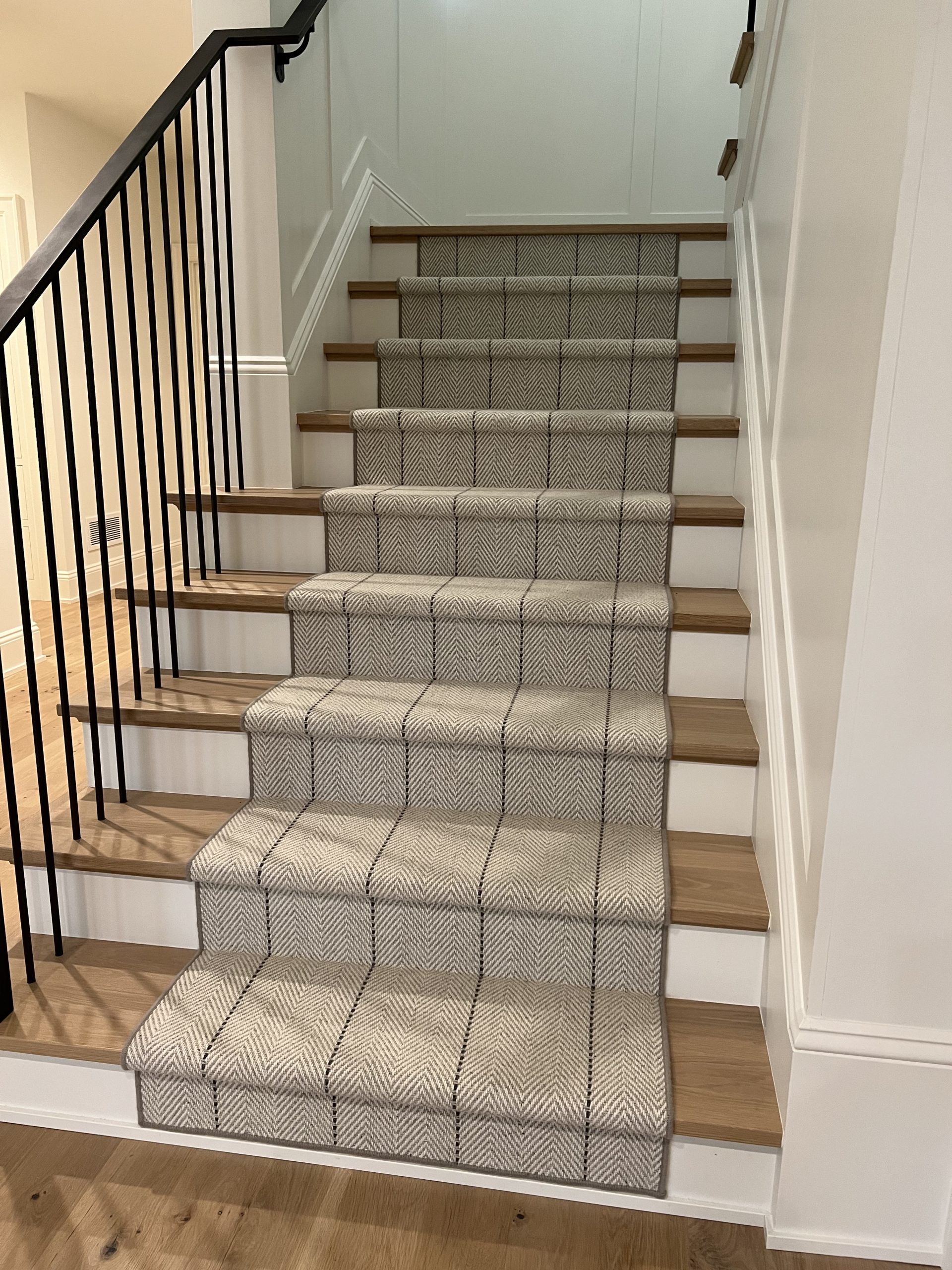
We took this picture when we toured Mark D. Williams Custom Homes Inc.’s‘ last masterpiece, that they had recently completed in Orono, MN. This staircase features a neutral herringbone runner, which makes it rather versatile, and bold stripe adds a distinct character.
Grey & White – Stanton, Bravo in Metal
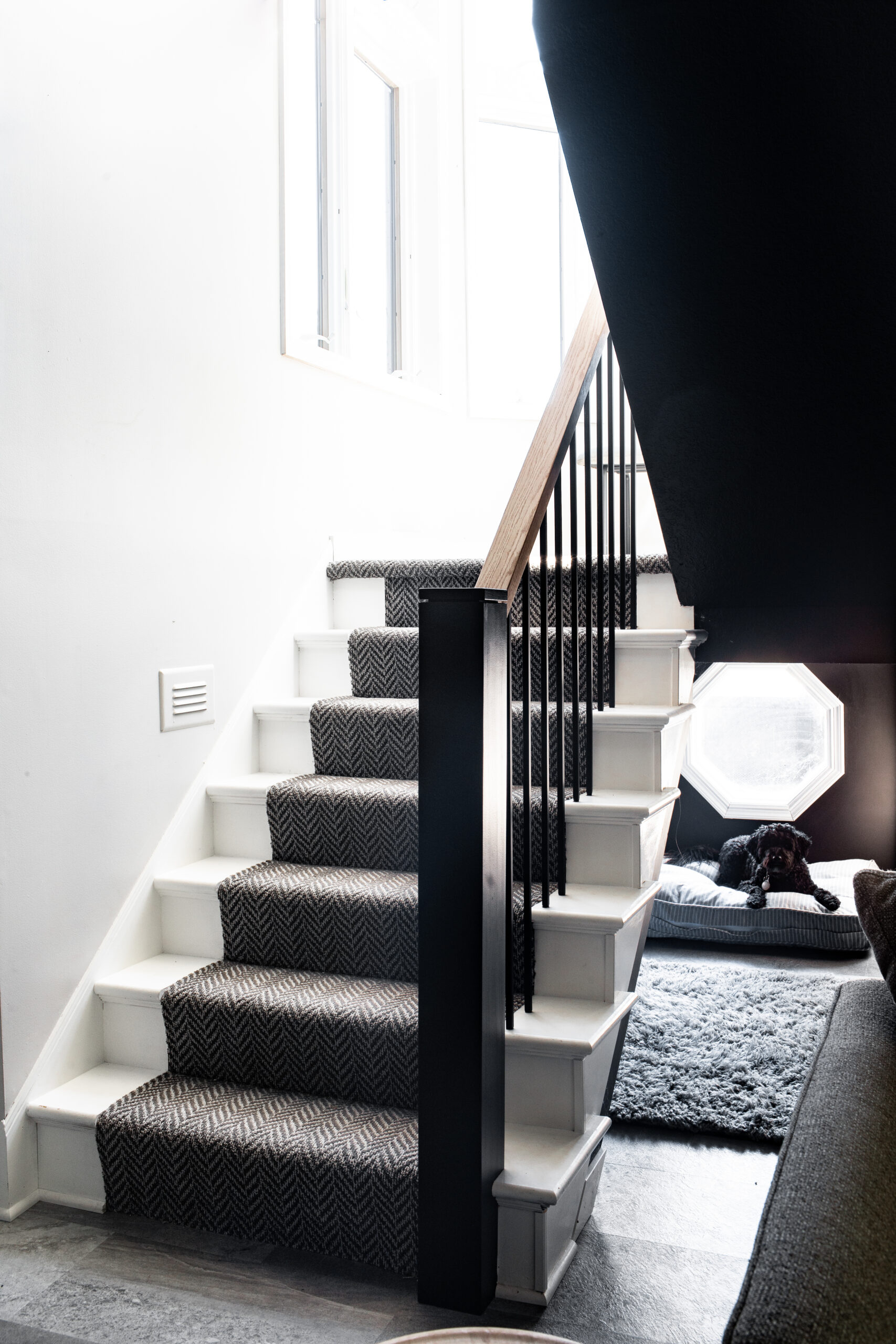
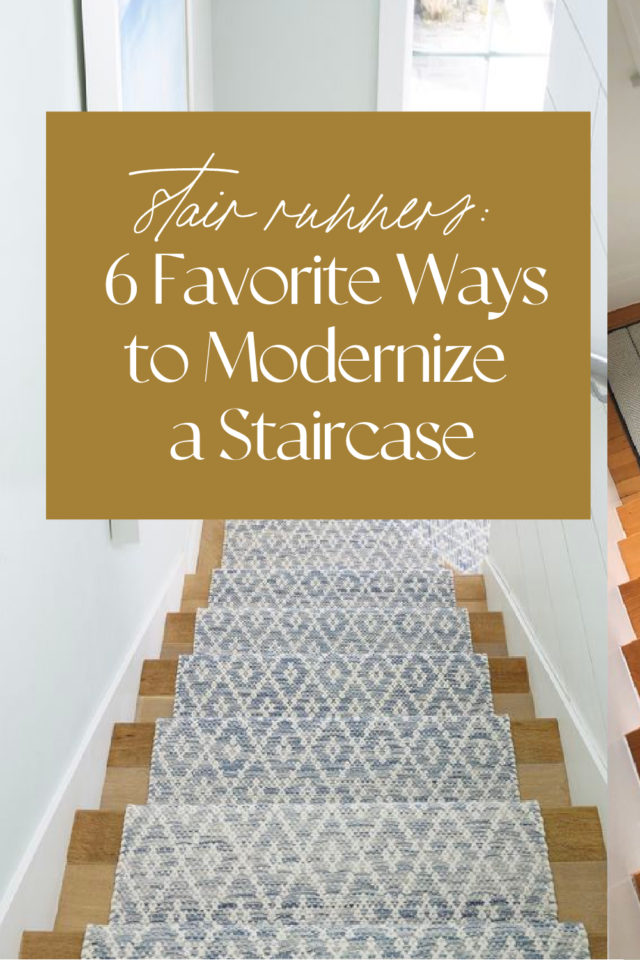
Diamonds – Melange Diamond Blue
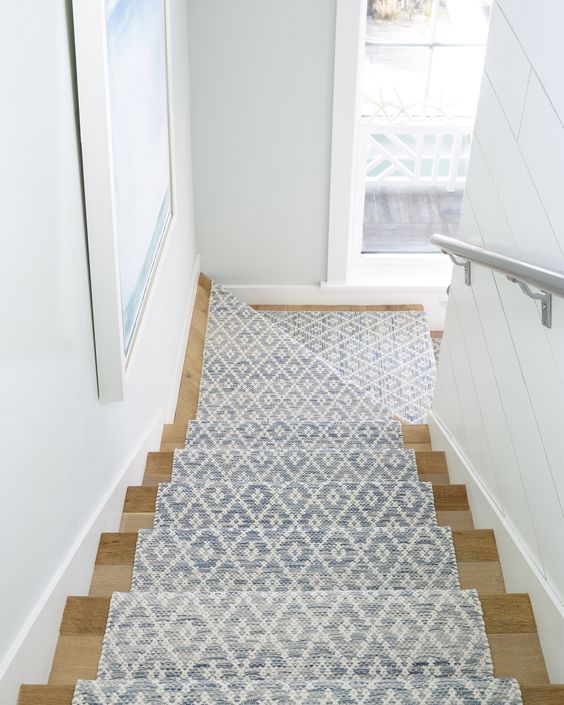
DIY Stair Runner
We love this tutorial by House on a Sugar Hill on how you can create a stair runner yourself!
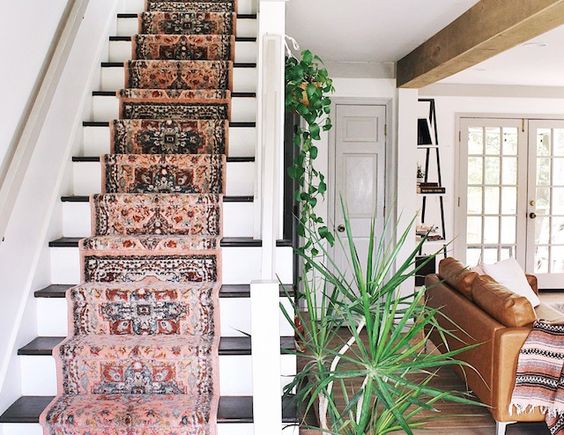
Watch: How to Install Engineered Flooring
If you are taking on a staircase project yourself, this step-by-step flooring installation guide from Jamie shows you the process from start to finish. The same precision and prep work applies to stair work too.
Updating your whole staircase? See our full guide to DIY staircase railing for tips, tools, and a complete cost breakdown. You can also browse how to choose grout color if you are tiling around your stairs.
Frequently Asked Questions About Stair Runners
Are stair runners a good idea?
Yes, especially on hardwood stairs. A runner softens a space that can otherwise feel cold and echoey, adds traction that is genuinely helpful for kids and older adults, and protects the wood finish from the constant foot traffic that stairs take. It is one of those additions that improves the look and function of a space at the same time.
How much does a stair runner cost?
Material costs vary widely based on fiber and quality. A basic synthetic runner might run $5 to $15 per foot, while a quality wool runner typically starts around $20 to $40 per foot. Professional installation usually adds $200 to $500 depending on your staircase size and complexity. A DIY installation with a rented staple gun or tack strips is a manageable project that can save significant money.
What material is best for a stair runner?
Wool is widely considered the best material for stair runners because it is naturally resilient, holds up to heavy traffic, and resists crushing over time. For households with pets or young children, a nylon or wool-nylon blend offers similar durability with easier cleanup. Avoid sisal and jute on stairs because they can be slippery and difficult to keep clean.
How do I keep a stair runner in place?
Tack strips installed on each tread and riser are the most secure installation method and give the cleanest look. Stair rods are a traditional alternative that pins the runner at each nose without adhesive, making it easy to remove for cleaning. For a temporary solution, double-sided carpet tape can work on low-traffic stairs, but it is not ideal for long-term use.
Can I install a stair runner myself?
Yes, and many homeowners do. The key tools you need are a staple gun or carpet tack strips, a rubber mallet, a knee kicker (rentable from most hardware stores), and a carpet knife. The trickiest part is getting the runner centered and the edges folded cleanly at each step. There are great tutorials online and it is a very doable weekend project for a confident DIYer.
What is the most popular stair runner style right now?
Neutral patterns are consistently the most popular because they work with a wide range of interiors and do not feel dated quickly. Herringbone, simple stripes, and understated geometric patterns are all strong right now. Pattern-on-pattern combinations, like a geometric runner against patterned wallpaper, are also trending in more design-forward homes.
Disclosure: This post contains affiliate links. Although we get paid a commission when you click through our links, all opinions and content are our own and we stand behind all brands and products we are sponsored by.

ProSource!
Where do i find the touch of blue carpet?
Can you tell me what the brand and color is for the Touch of Blue and Subtle Stripe runners?