DIY Your Staircase Railing
If you all remember back in May, we said goodbye to our poopy carpet in our main level living room, our lower level, and on the stairs. At the same time, we also started dreaming and talking about what to do with our stair railing, and the day has finally come, we’ve finally carried out our plans and updated them!
Before
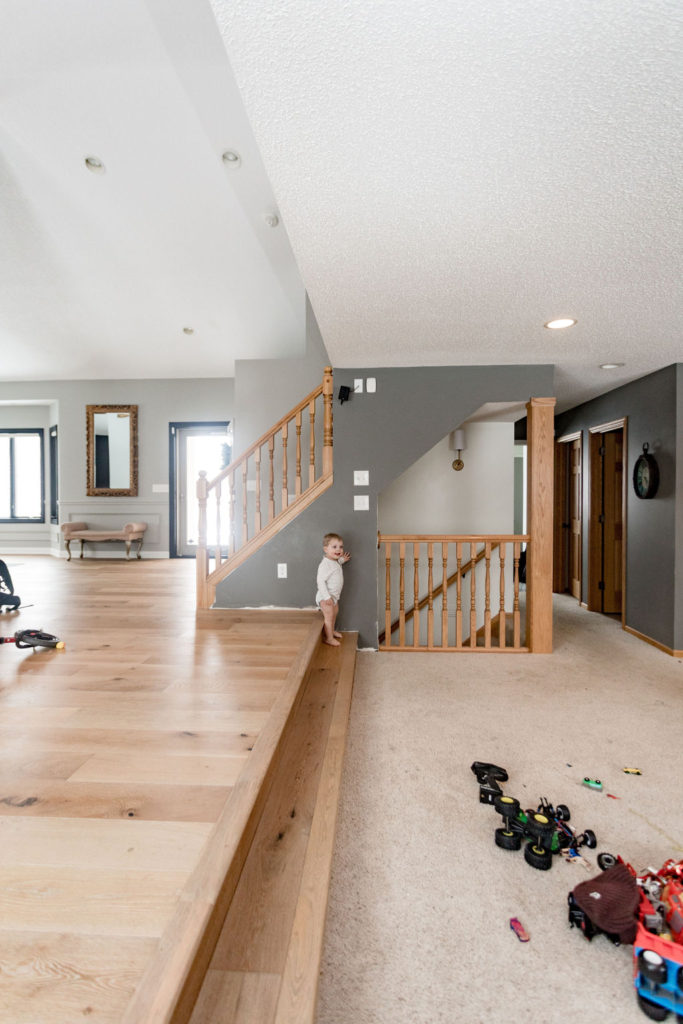
So first, let’s check out the before. So long, golden oak staircase railing.
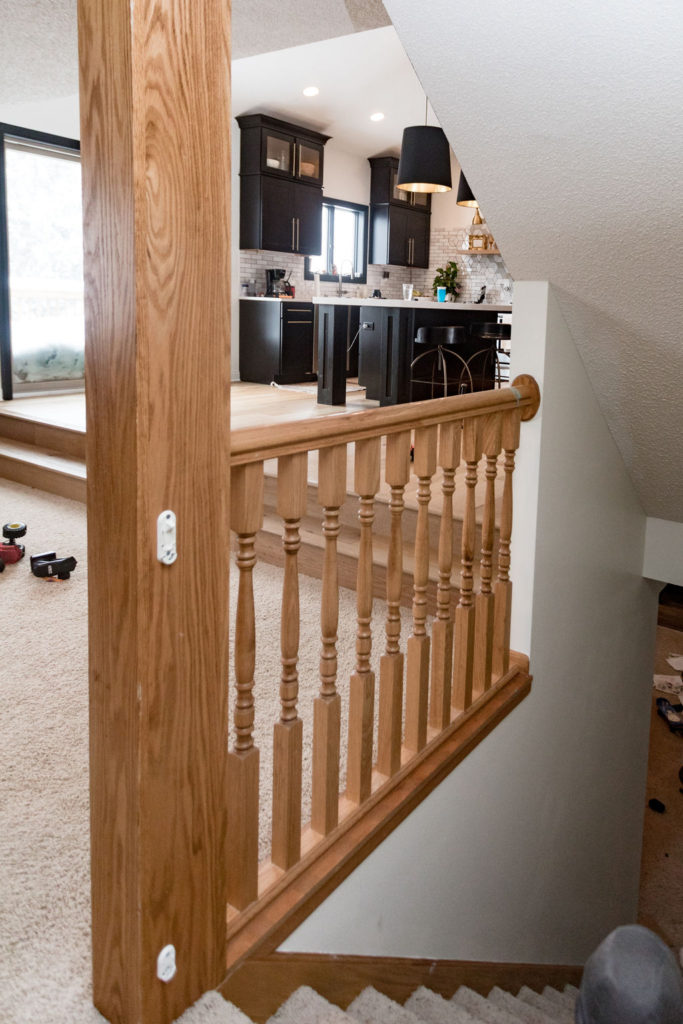
Slowly but surely, we’ve been saying goodbye to the golden oak throughout our home, and the last thing to go on our main level was our staircase railing.
Design Planning
Part of the reason why this took so long was that we could not figure out for the life of us what color and finish we wanted to do. Our window trim is black; we swapped out all of the floorings on our main level with light oak and white base trim.
We love all the elements that all of these colors have to offer.
So we couldn’t decide which one to go with to complement everything else we had going on in our home. This was our mood board and design inspo that we loved and the look we were trying to create.
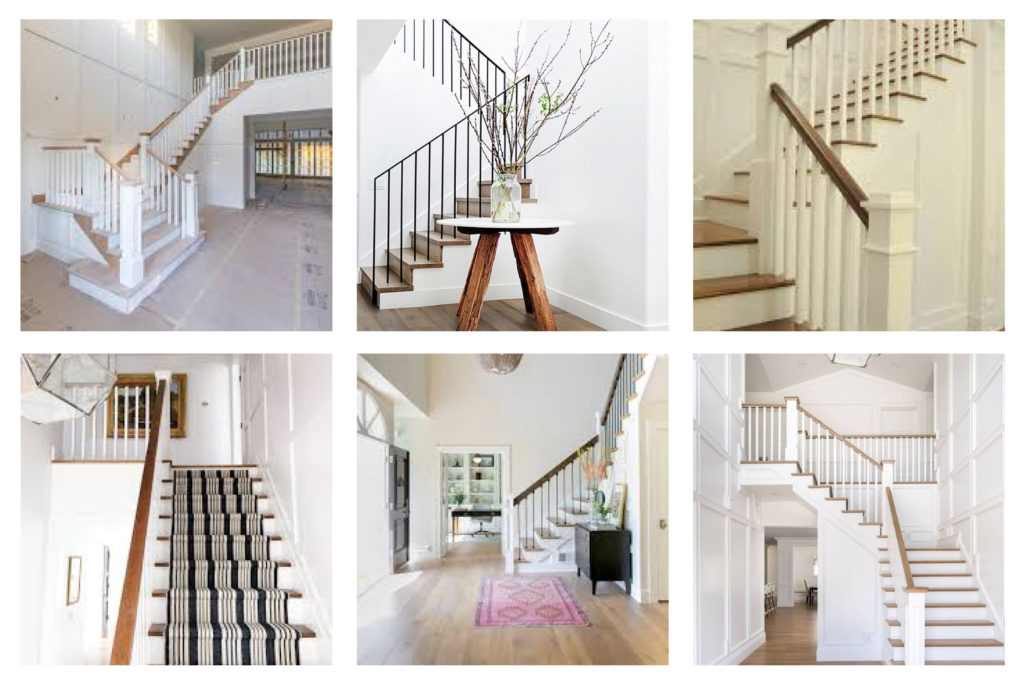
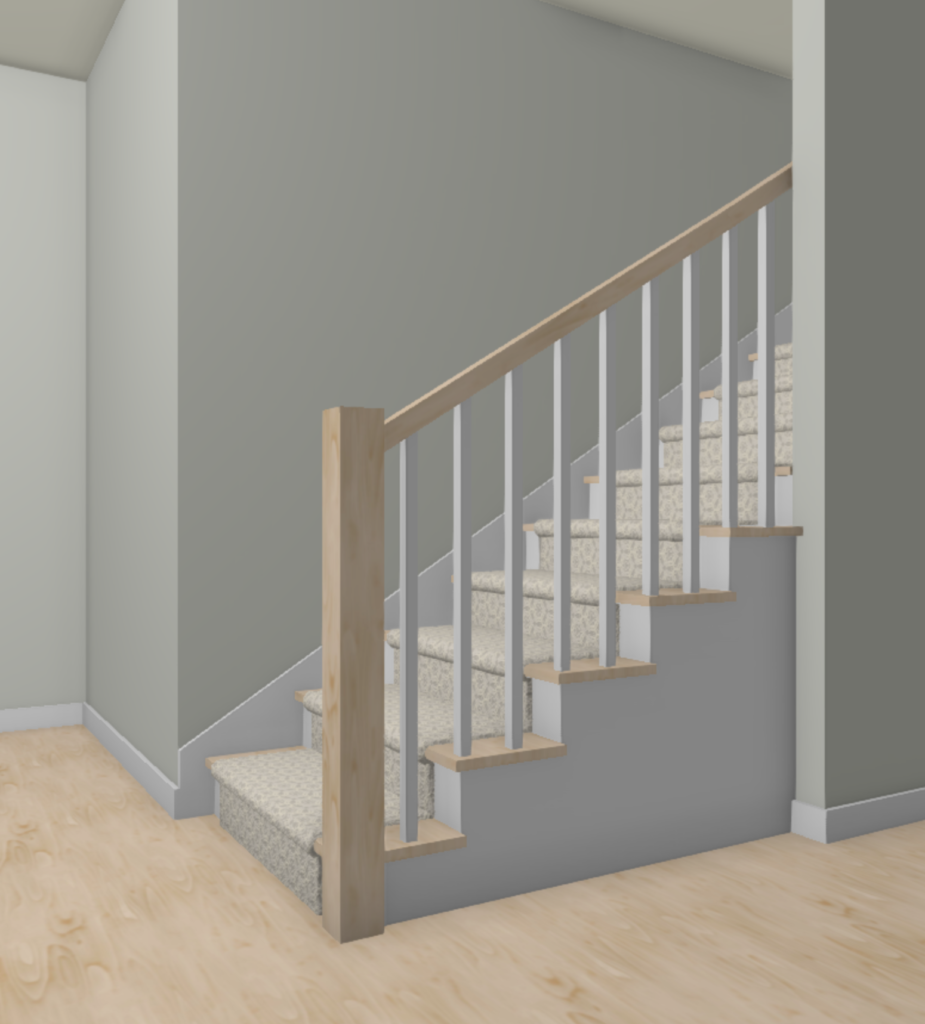
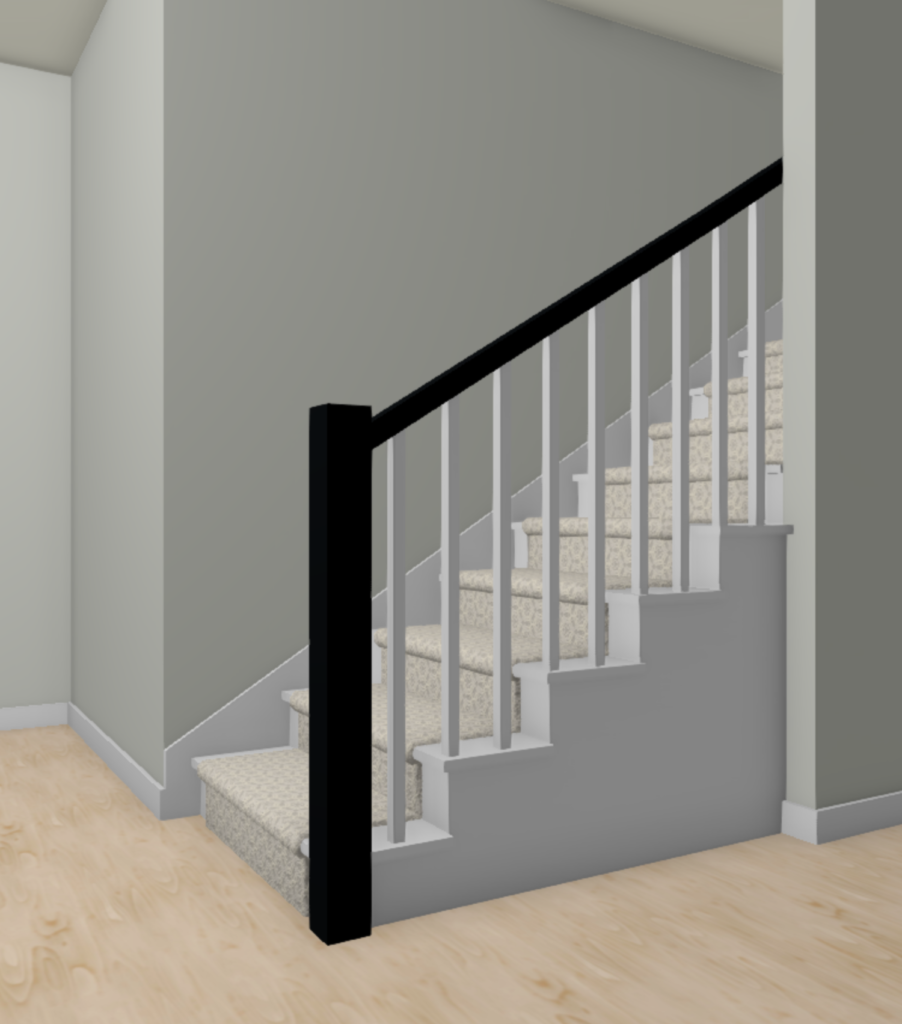
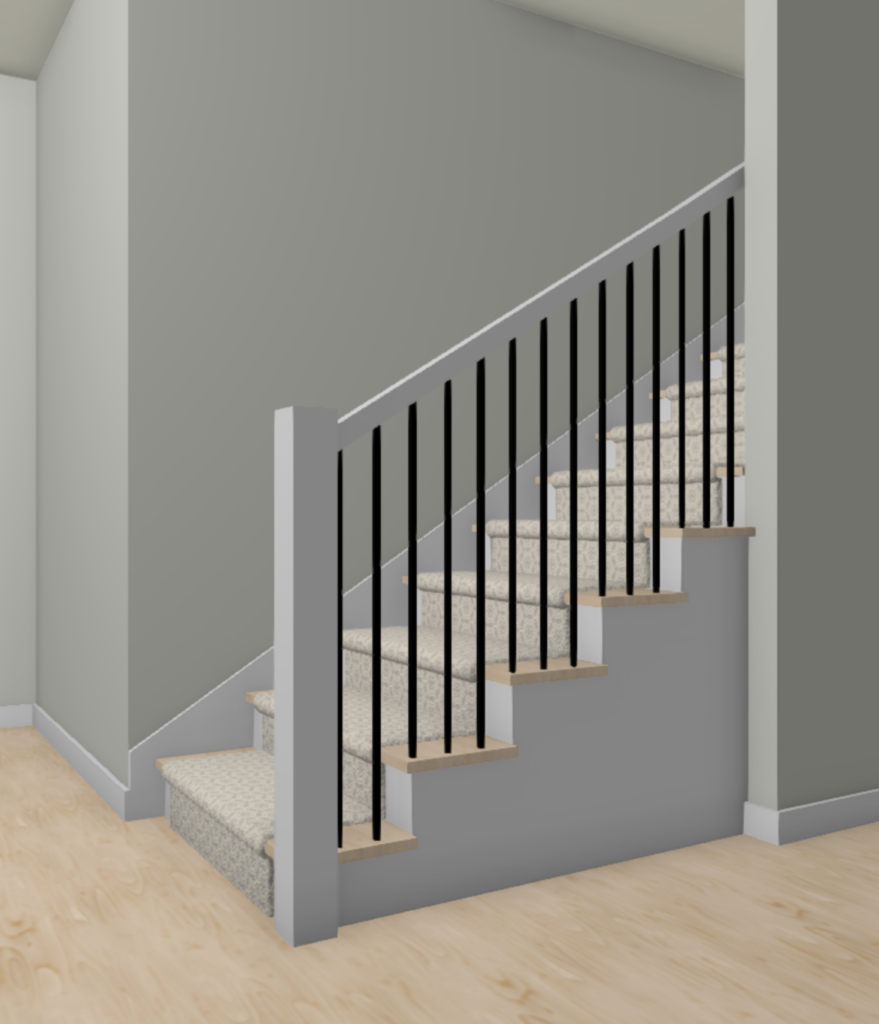
I was leaning more towards all light oak and white paint but Jamie really liked the idea of incorporating black. Here’s what we mocked up and asked you all to vote on back in May to help us decide.
OPTION ONE
OPTION TWO
OPTION THREE
OPTION FOUR
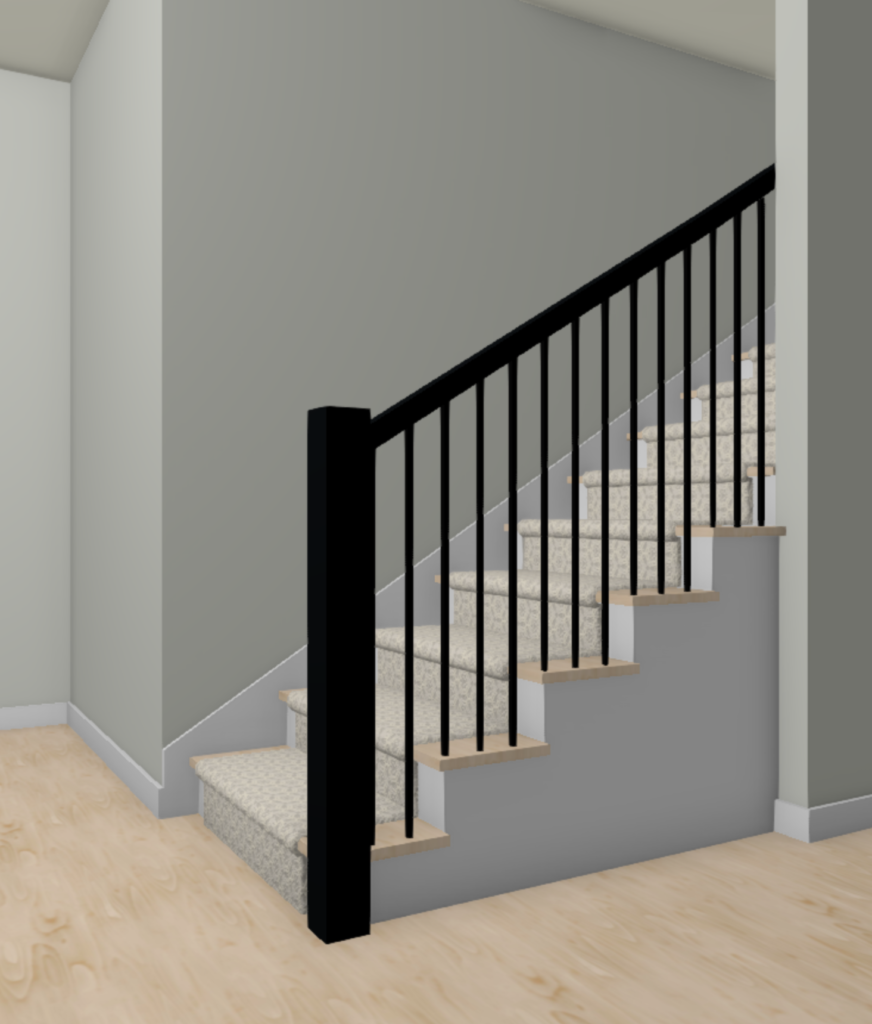
Three was the winner, but in the end, we did none of them! Haha!
When Jamie started to think about it more, with these sticky little kid fingers we have in our home; he didn’t want a white handrail.
Which made sense to me. And then a few of you on the Instagram poll recommended incorporating all three: white, wood, and black.
I thought it’d be a bit too much but the more we started to think about it, we thought, why not!
So, that’s exactly what we did!
I also wanted a carpet runner on our stairs, with wood on the sides, but Jamie squashed that down real quick.
Under Construction
So once we had our designs down, we got to work and demoed out the staircase railing.
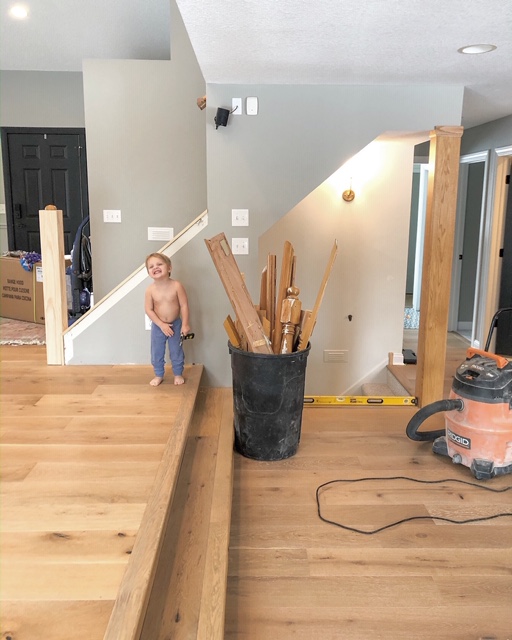
We had recently just finished up a staircase railing for a client, so Jamie was on a roll with doing staircase carpentry work and on a mission the last week of the year to finish ours while he was at it.
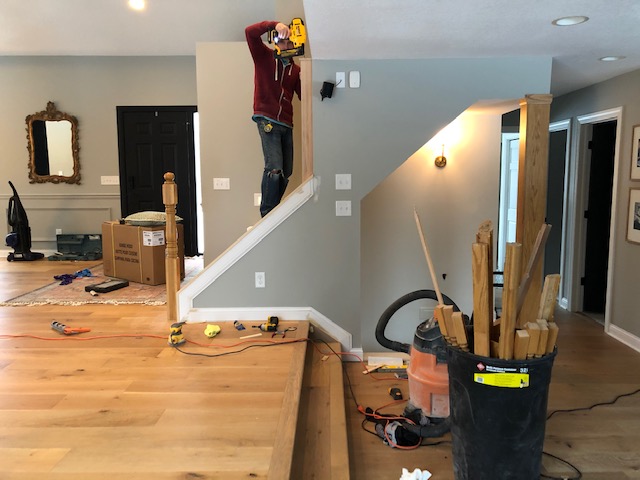
You can watch some fun videos of Jamie installing this that he recorded and posted on Instagram here and here.
How-To Takeaways
It’s hard to give a full tutorial on this as every home is different. Different dimensions, materials they want to incorporate, etc.
Tips, Tricks, and Takeaways
Don’t demo what you don’t need to
Sometimes we have clients that hire us for their renovations but do the demo themselves, and at times, demo more than they needed to. Which ends up costing them more time and money.
Here’s a perfect example of what Jamie did for the post. He wanted to get rid of the colonial newel post (the ball top had to go), but with a craftsman-style slip-on box post he made, he didn’t need to demo out the original post.
It was still very sturdy and anchored into the floor joist system so he kept it and used it as his mount. You can find a video of him installing it here.
This not only saved him a ton of time by not having to demo and build a new one but also saved money.
Pre-assemble is key
What takes Jamie the most time when it comes to any carpentry project is pre-assembly. He spends hours, if not days, out in the shop, getting everything cut perfectly and pre-assembled before he does any assembling on the job sites.
Tools & Materials Needed
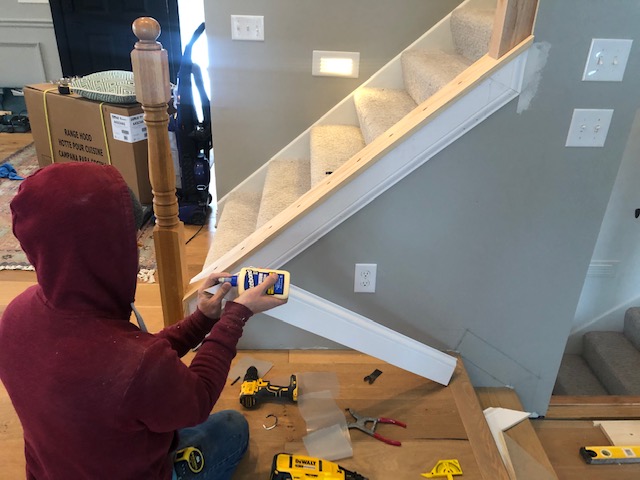
When it comes down to doing it yourself or hiring it out, one of the biggest factors is if you have the tools needed for the job. All the tools and materials that we used to complete our staircase railing project was:
Tools:
- Table saw
- Miter saw
- Level
- Drill
- Impact Driver
- Square
- Angle finder
- Miter clamps
- Tape measure
Materials:
- Spindles
- Handrails
- Base trim
- 1 x 6
- Lag bolts
- Newel Posts (we made our own, but you can buy pre-made)
- Wood glue
- Wood filler
- Sandpaper
- Paint & Stain
Time & Pricing
It took Jamie about two full working weeks to work on this from start to finish the staircase railing.
For the size of our stair railing, which the bottom rail is 50″ and the top rail is 52″, we spent $1,011.72 on all materials needed. If you were to hire this same job out to someone, we would charge around $4-5K for the job.
Often people ask why it’s so expensive when hiring it out. And if you do the math you’re probably thinking, you work a couple of weeks and profit $3K, and I’m sure you realize, that’s not all profit.
Like any business, we have expenses such as tools, insurance, workers comp, taxes, and Jamie and carpenters are skilled and it’s taken them many years of training that they should be valued and paid for their craft.
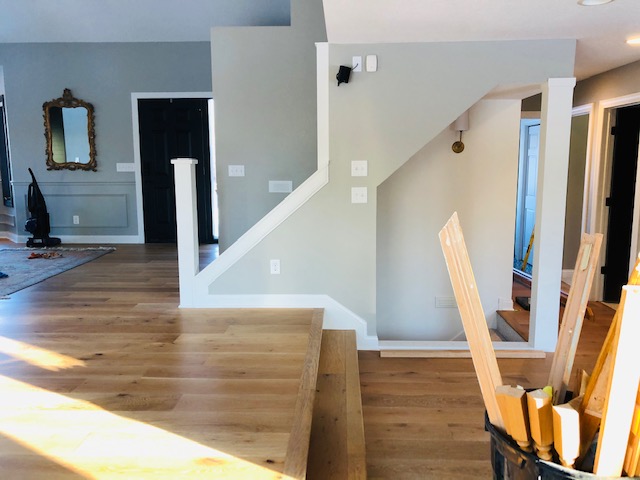
Paint Colors
- Posts and Trim | Extra White (HGSW4005)
- Doors & Window Trim | Tricorn Black (HGSW1441)
- Wall Color | Mindful Gray (HGSW3476)
- Black Square Metal Spindles
- White Oak Railing Material
- Railing Poly
After
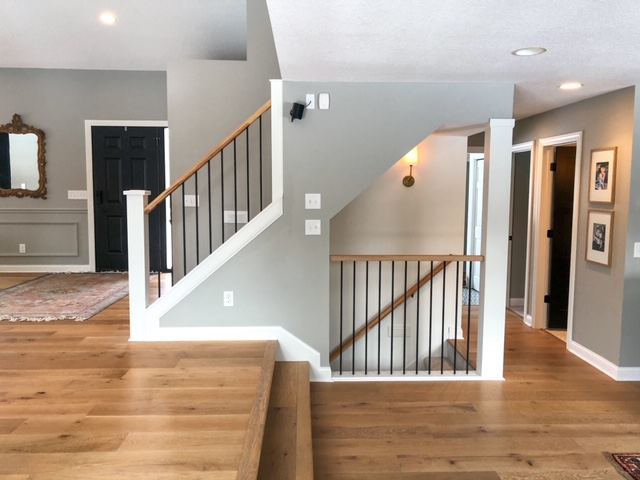
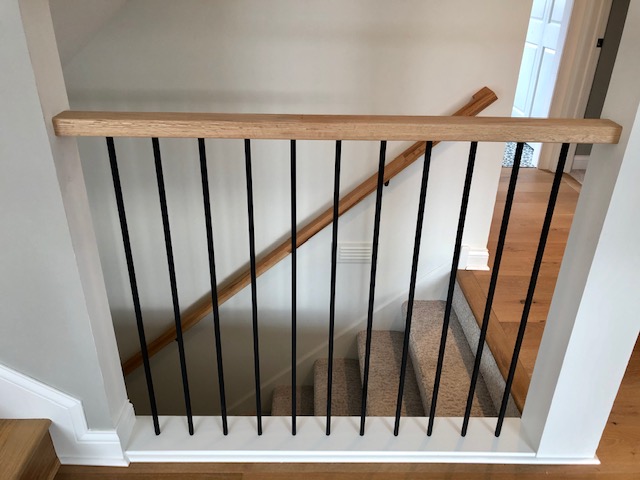
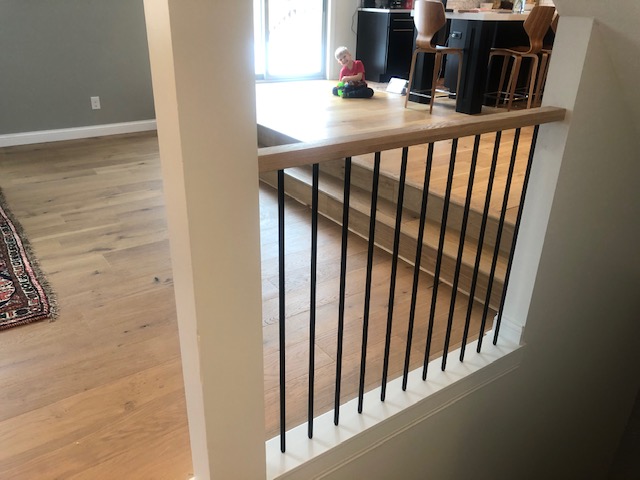
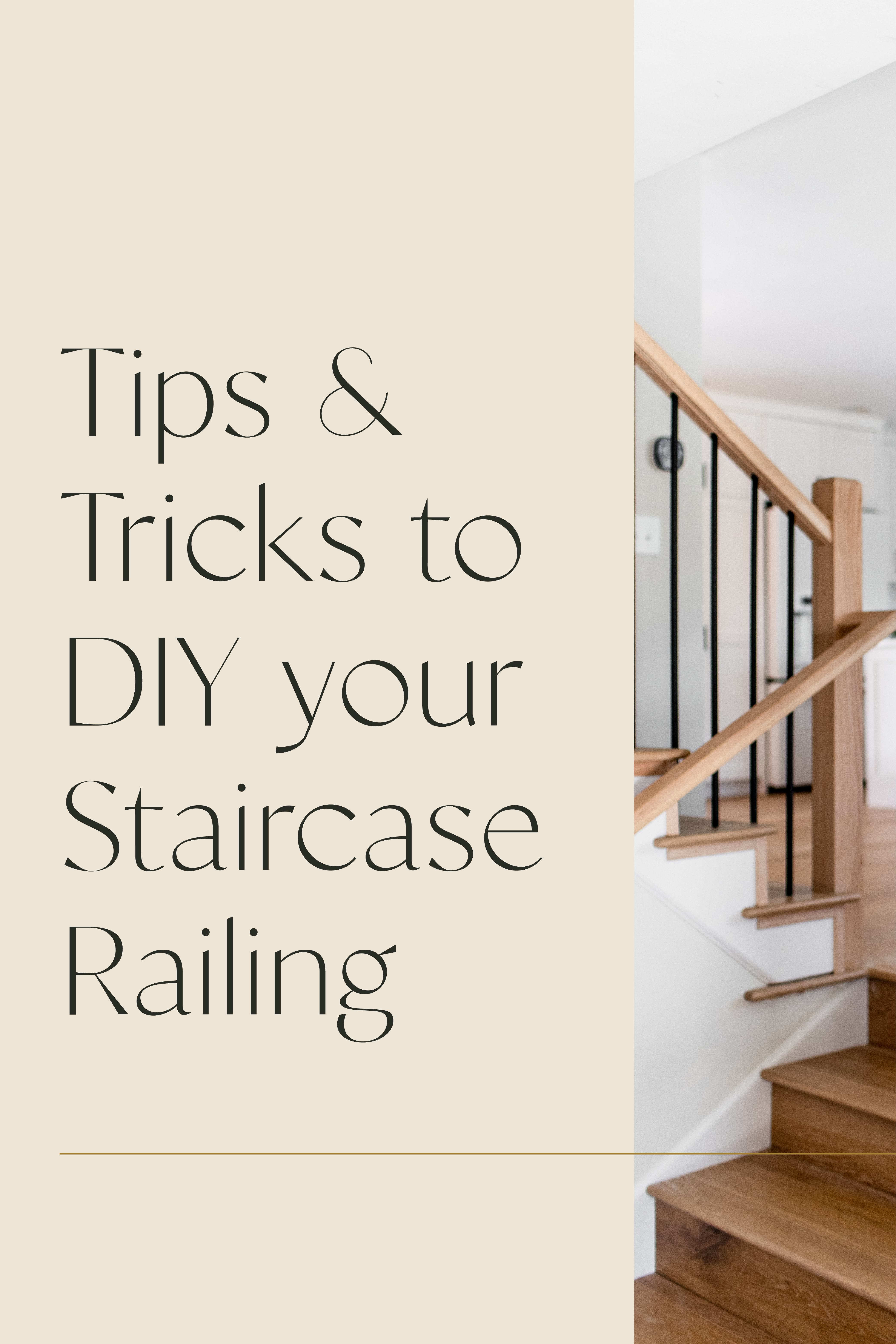
And the after!! We were so happy with how it turned out and loved how the black metal railings complement the window trim and doors throughout our home.
Also, we love how the white posts complement the white base trim throughout and how the wooden handrails play off our flooring. The posts also complement the two white oak floating shelves in the kitchen and soon-to-be white oak floating shelving around our fireplace.
You can see these three areas in the same view.
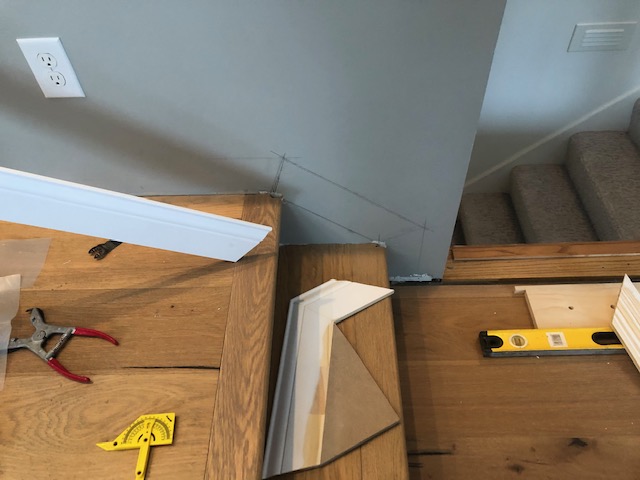
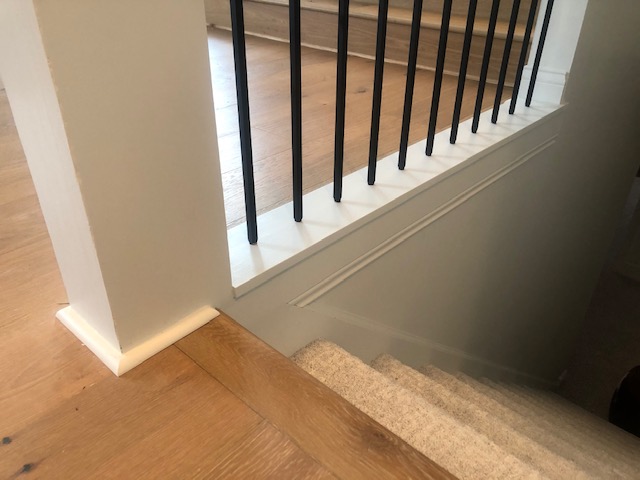
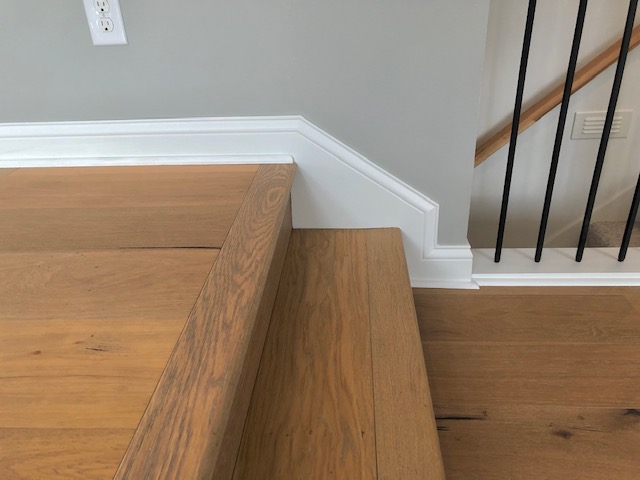
Another issue we ran into with this project is that before we put in our hardwood flooring, there was built-up tile right here in this area. Once we removed the tile and leveled out the floor, there was a gap from that base trim coming down the stairs on our new hardwood flooring (I wish I would have taken a photo).
So Jamie’s solution was taking the trim next to the closet and wrapping it around into the stairs.
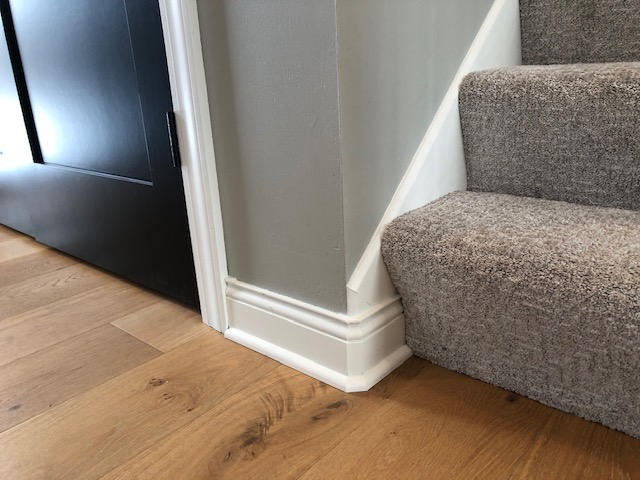
We had a similar situation to the right of the stairs. So he made a little trim piece to cover it up.
Little details like this are often what takes the longest and it was really fun to watch him over a few weekends working on this and to literally see how much time the finishing details take.
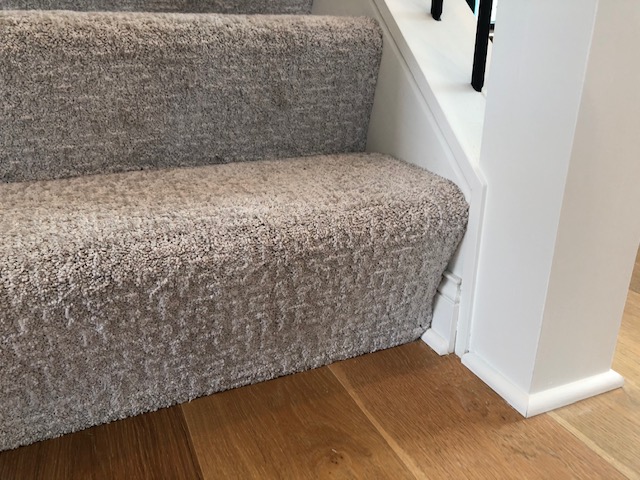
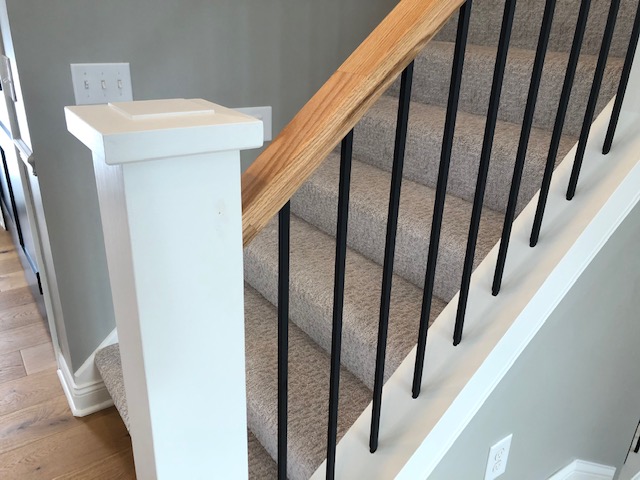
It’s been so nice coming home to a fresh and clean space now that our rails are done. Also, simply having handrails as we were going a couple of weeks with no barrier and, luckily, no one got hurt.
I can’t wait to share with you the stair railing we recently did with the client we mentioned at the beginning of this post.

3 thoughts on “DIY Your Staircase Railing | Tips & Tricks”
Comments are closed.